.png)
Search Results
Search this site
145 results found with an empty search
- Results | PeerK12
peerk12's results Since 2021, PeerK12 has been on the front lines protecting K–12 education from anti-Jewish hate and extremist agendas; sometimes that advocacy means addressing individual incidents by working directly with impacted parents, students, teachers, and concerned community leaders, other times that means helping to shape - or reshape - policies that ensure long term protection against bias and hate. May 2025 | After a Jewish freshman at San Dieguito Academy was the target of a human swastika during what was supposed to be a "smiley-face" fly-over photo-op, the school's leadership did not take action. Once PeerK12 was informed of the incident upon meeting the parents in August 2025, we immediately took action, alerted the school board and superintendent who were unaware - which went against district policy - and began the UCP process. Soon after, the Principal was removed and two APs were reassigned. As of June 26, 2026, the National Jewish Advocacy Center, in partnership with PeerK12, filed a Petition for Writ of Mandate with the State of California seeking to compel enforcement of a California Department of Education order arising from an antisemitic incident at a district school. According to the petition, the district failed to implement the required corrective actions, and the Department of Education failed to ensure compliance with its own order, prompting the filing of the lawsuit. November 2023 | We mobilized to ensure Lallia Allali was removed as Chair of the district’s DELAC by a 3-1 committee vote (one absent) after exposing her antisemitic and dangerous social media post, published just 20 days after the 10/7 attack on Israel. PeerK12 circulated a petition that garnered 1,587 signatures along with 340 individual comments in less than 20 hours. We mobilized testimonies at both the DELAC as well as at the following SDUSD board meeting where the decision was upheld. Allali is the wife of Imam Taha Hassane, who heads the Islamic Center of San Diego. October 2022 | After a Carmel Valley Middle School history teacher told her 7th grade student that “Hitler had good leadership skills” when he asked her why the photo was on a board amongst MLK, JFK, and FDR, PeerK12 tried times to motivate the district to investigate the incident with no response. That's when we mobilized the community to advocate directly to the school board. Our campaign garnered 1,448 signatures and widespread media coverage, eventually leading to the termination of the teacher as well as the principal, and sparked significant changes including the establishment of a Jewish Parent Committee and new staff training protocols. December 2023 | After a student anonymously published an antisemitic and anti-American cartoon in the Bonita Vista High School school newspaper "Crusader," PeerK12 was brought in to mediate a conversation between the student editors and the Jewish club along with staff and the Principal, to help educate them on the dangers of social media echo chambers as well as the importance of due diligence and journalistic integrity. The editors printed a retraction and apology. April 2024 | After exposing the antisemitic posts of the Poway Unified School District JEDI (justice, equity, diversity & inclusion) committee chair, we mobilized to demand the school district be held accountable and remove her. The letter writing campaign resulted in the district taking immediate action and completely dismantling the ENTIRE Palomar Council PTA J.E.D.I. program. September 2024 | After a parent submitted this coloring sheet to our partner "JewsinSchool" they alerted us and we immediately called a board member that we had a relationship with. That board member called the superintendent who was at a conference in Chicago, who in turn called the school's Principal who walked through the classroom and went through every piece of paper with the Superintendent on the phone to insure that there were no other egregious curriculum. The coloring sheet was immediately pulled, an investigation ensued, and an apology was issued. November 2023 | PeerK12 was called by parents at Citizens of the World Charter School in East Valley Los Angeles after first graders were taught about an alleged "genocide" occurring in Gaza by Israel. PeerK12 advised the parents on their rights and what steps they should take to advocate for themselves and their children, including which ed code and state laws were violated by the lesson. The two instructors were dismissed from their jobs, the Principal was put on leave during the investigation, and upon her return she posted the image on the left on social media and was escorted off campus and terminated immediately. January 2024 | PeerK12 took action on a Saturday morning, the moment it was made aware of an event that coming Monday at Helix Charter High School that would be platforming three anti-Zionists to talk about the Israel-Hamas war under the guise of a "discussion panel" and listening/re-thinking. We immediately activated our base with talking points and email addresses and within two hours the Principal notified staff that the event was cancelled. October 2021 | PeerK12 collaborated with Student Board Member Zach Peterson to draft and negotiate the Resolution “In the Matter of Addressing Antisemitism and Affirming the Value of Jewish Students, Staff, and Families" co-sponsored by board member Sharon Whitehurst-Payne in San Diego Unified School District which passed unanimously. We were successful in k eeping in the essential IHRA definition of antisemitism. We mobilized more than 50 speakers - students and parents alike - who were up against opposition such as the head of the teacher's union and the Ethnic Studies department. November 2021 | PeerK12 worked with school board member Michael Allman and the then-superintendent to put the resolution "Addressing Antisemitism and Affirming the Value of Jewish Students, Faculty, Staff and Families" on the agenda in San Dieguito Union High School District. We mobilized a Jewish Student Petition with examples of incidents that garnered 250 signatures within 24 hours, as well as a separate Parent Petition with 400 signatures in the same time frame to ask the board for this Resolution. With only the support of AISH and Rabbi Cooper of the Simon Weisenthal Center from the organized Jewish community, we were able to get the resolution passed with 4 yays, 0 nays, and 1 abstention. December 2021 | PeerK12 worked directly with Superintendent Dr. Moises Aguirre and Asst. Superintendent Dr. Vernon Moore to put the Resolution Addressing Antisemitism and Affirming the Value of Jewish Students, Faculty, Staff and Families on the agenda after Bonita Vista High School student Anna Maya reached out to PeerK12 following the graffiti attack at her school. With her testimony and that of teacher and Jewish Student Union advisor Jennifer Ekstein, the board passed the resolution unanimously. MORE RESULTS ARE BEING ADDED BUT WE HAD TO HIT PUBLISH AT SOME POINT! COME BACK SOON TO SEE WHO WE'VE HELPED AND WHAT WE'VE ACCOMPLISHED.
- More Resources | PeerK12
PeerK12 offers resources to users on antisemitism in education. Resources RESEARCH ARTICLES podcasts VIDEO COLLECTIONS Curriculum Jewish American Heritage Month Ethnic Studies Unions california San Diego Nationwide Federal LegaL & Public Policy Toolkits IHRA Resolutions Relevant Elections
- Take Action | PeerK12
We protect Jewish Civil Right in K-12 environments. Join us now to fight back against violent and biased ideologies in curriculum and classrooms. ACTION CENTER Ready to role up your sleeves & take action? LET'S DO THIS. Resources News Podcasts Blog PeerK12 responds rapidly and decisively to identify, verify, and permanently remove sources of institutionalized Jew-hatred in K-12. PeerK12 is a proactive force for accountability & change. We confront antisemitism and bias in schools by demanding equal protection under the law for Jews in K-12. From removing harmful curriculum to holding staff accountable and mobilizing communities, we ensure issues are addressed and resolved. We don’t just raise awareness; we deliver results. When incidents go unchallenged and others stay silent or fail to act, we step in to engage policymakers and set new standards so that no student, teacher, or family fights alone. We work with everyone, but specifically we focus on helping: Parents Students Teachers Administrators Superintendents Elected Officials Grassroots Orgs Community Members take action toolkit Download the FREE PeerK12 Take Action Toolkit Now DOWNLOAD The background setting that derailed a school sponsored video on mental health Students who reported the incident to PeerK12 expressed fear of retaliation and did not feel comfortable raising concerns - fears that are objectively reasonable given the District’s prior actions. Take Action Exposing the Truth Raising Awareness Incident Resolution Tracking Extremists 7 Educating with Podcasts & Webinars Action Alerts TAKE ACTION WITH PEERK12 Submit an Incident report Few things are as critical as documenting every single incident to ensure Jewish Civil Rights are being upheld and protected in K-12. Help us help you - submit your incident report. Report an Incident PETITIONS & Action Alerts Petitions and action alerts carry more weight then you think - when communities unite to communicate as one to decision makers, you'd be surprised what can be accomplished. Verified Petitions TRAININgs, EVENTs & webinars Get educated on the issues we are tackling and find out how you can lend your talents to our movement and help remove Jew-hatred from our K-12 schools permanently. Request a Session ISSUES AT SCHOOL? WE CAN HELP. We've been helping parents, students, teachers, etc. deal with incidents in schools since 2021 - we've seen (and fixed) it all. You are not alone - we're here to help you. Request a Meeting JOIN our trusted partners COALITION To play, press and hold the enter key. To stop, release the enter key.
- PeerK12 | unapologetically fighting antisemitism in K-12
Since 2021, PeerK12 has been on the front lines protecting K–12 education from Jew-hatred and extremist agendas. With expertise in ethnic studies, school district politics, and Jewish Civil Rights advocacy —we are unapologetic in our work to expose and remove antisemitism in elementary, middle, and high schools at the root. PARTNERS FOR EQUALITY & EDUCATIONAL RESPONBILITY JEWISH CIVIL RIGHTS IN K-12 FIGHTING FOR unapologetically GET SUPPORT NOW Since 2021, we've been helping parents nationwide fight back against institutionalized anti-Jewish-hatred, anti-zionism, and systemic antisemitism in their classrooms, curriculum and school districts. We're parents ourselves - so we know what it's like to try and navigate the K-12 system and the frustrations of having your concerns trivialized or even ignored. The system is complicated, confusing, and cumbersome. Purposefully so. But we're here to help. We act like first responders and protect the victims when it matters most; and then we go after the root cause to make sure it never happens again. PeerK12 Incident Response Support DONATE TODAY TO HELP US PROTECT JEWISH CIVIL RIGHTS IN K-12 DONATE NOW! When Jew-hatred and intolerance go unchallenged, PeerK12 steps in as a proactive and relentless force for accountability and change. Report an Incident Our expertise extends beyond incidents management - we also handle discrimination related to ethnic studies, curriculum issues, school district politics, and violations of Jewish Civil Rights at the state board of education level. Resources PARENT TESTIMONIAL It was only after we reached out to PeerK12 that the hate incident against our child was escalated and the district FINALLY did anything. If it hadn't been for PeerK12, the District would have just swept this under the rug & gotten away with it! CAM & PeerK12 May 2026 Jewish American Heritage Month Scholarship winners awarded cash prizes at RUTH Holocaust Museum Event with Survivor Ben Midler. Learn More Read Our Latest Updates Read Now
- News Articles (List) | PeerK12
NEWS, OP-EDs & ARTICLES BACK TO NEWSROOM Resources News Podcasts Blog Filter by Tags Education Policy Elections Ethnic Studies Incidents Indoctrination Law Suits Legislation Politics Teachers Unions Number of articles found: 84 NEWS ITEM CATEGORY: PeerK12 in the News Education Policy June 10, 2026 Combat Antisemitism Movement and PeerK12 celebrate student scholarship winners of San Diego Jewish American Heritage Month Competition San Diego Union Tribune Staff Writer The Combat Antisemitism Movement (CAM) and PeerK12 concluded their 2026 San Diego Jewish American Heritage Month (JAHM) Student Scholarship Contest with a special awards ceremony held at the RUTH: Remember Us The Holocaust exhibit at the La Jolla Library on Tuesday, June 9. Read More NEWS ITEM CATEGORY: Article Law Suits, Incidents, Education Policy, Teachers Unions May 31, 2026 Reforms Coming for Sequoia Union High School District over Anti-Semitic Harassment of and Pro-Hamas Propaganda Evan Gahr Wholesale attacks on Israel are now properly deemed a form of prohibited anti-Semitism Read More NEWS ITEM CATEGORY: Article Law Suits, Incidents, Education Policy May 29, 2026 California School District Settles Major Antisemitism Lawsuit with Victims Who Alleged Rampant Abuse Dion J. Pierre Litigation related to antisemitic incidents in California K-12 schools surged following Hamas’s Oct. 7 atrocities, which triggered a barrage of antisemitic hate crimes throughout the US and the world. Read More NEWS ITEM CATEGORY: Article Law Suits, Incidents, Ethnic Studies May 26, 2026 District settles antisemitism lawsuit Adriana Hernandez The lawsuit claimed Woodside history teacher of spreading “pro-Hamas propaganda under the guise of teaching 10th-grade World History.” Read More NEWS ITEM CATEGORY: Article Law Suits, Incidents May 11, 2026 Investigation launched into Florida's Bay County School District for alleged antisemitic discrimination J.T. Lynch The U.S. Department of Education has opened an investigation into alleged antisemitic discrimination in the Bay County, Florida, School District. Read More NEWS ITEM CATEGORY: Article Indoctrination May 8, 2026 Legal challenge to SFUSD ‘Voices’ hits Mayor Lurie Liz Le Friends of Lowell Foundation (FOLF) formally requested a meeting with Mayor Daniel Lurie and senior City Hall officials, citing alleged violations of the California Brown Act in the San Francisco Unified School District’s (SFUSD) adoption of the controversial “Voices: An Ethnic Studies Survey” curriculum. Read More NEWS ITEM CATEGORY: Article Incidents, Indoctrination, Education Policy May 6, 2026 DC JCRC calls out ‘significantly’ elevated antisemitism in Montgomery County, Maryland schools Haley Cohen ‘Too many Jewish students and educators at too many MCPS schools continue to face too many threats,’ said COO Guila Franklin Siegel Read More NEWS ITEM CATEGORY: Article Law Suits, Indoctrination May 4, 2026 Brandeis Center files Title VII complaint against the National Education Association Haley Cohen The leading Jewish legal group alleges that the country’s largest teachers’ union has repeatedly discriminated against its Jewish members Read More NEWS ITEM CATEGORY: Article Education Policy, Indoctrination April 26, 2026 Georgia passes landmark transparency law for foreign funding in universities, K-12 schools Haley Cohen The Georgia Solidarity Network and Reps. Esther Panitch and Houston Gaines spearheaded the effort after a report was released documenting Qatari funding of Georgia’s public schools Read More NEWS ITEM CATEGORY: Article Law Suits, Incidents April 23, 2026 Jewish San Leandro high schooler sues for ‘pervasive’ antisemitic harassment Niva Ashkenazi A Jewish student at San Leandro High School has sued her principal and two teachers, alleging “pervasive and unrelenting” antisemitic harassment and discrimination over two years, leading to panic attacks and a precipitous drop in her GPA. Read More NEWS ITEM CATEGORY: Press Release Incidents, Education Policy April 21, 2026 PeerK12 Statement on Politicized Classroom Video at Torrey Pines High School in the San Dieguito Union High School District PeerK12 Staff District-Approved “Men’s Mental Health” Video Created a Politically Charged, Hostile Environment for Jewish Students Read More NEWS ITEM CATEGORY: Press Release Education Policy March 19, 2026 The Combat Antisemitism Movement (CAM), in collaboration with PeerK12, announced on Thursday the launch of the San Diego Jewish American Heritage Month Student Contest. CAM & PeerK12 Staff Submissions Now Open for San Diego Jewish American Heritage Month Student Creative Read More NEWS ITEM CATEGORY: Article Law Suits, Incidents February 26, 2026 French teacher sues UN school in New York after enduring ‘15 months of hell,’ Jew-hatred Aaron Bandler “Although the school didn’t terminate her, it was essentially constructive termination, because the environment had become so hostile that she was unable to work there,” Lauren Israelovitch, of the National Jewish Advocacy Center, told JNS. Read More NEWS ITEM CATEGORY: Article Law Suits, Incidents, Indoctrination, Education Policy February 26, 2026 EXCLUSIVE: The First Antisemitism Lawsuit Against a U.S. State Maya Sulkin & Frannie Block The filing claims Jewish children across California are bullied by peers, targeted by teachers, and taught curricula that portrays them as oppressors - with the state failing to intervene. Read More NEWS ITEM CATEGORY: Article Law Suits, Incidents, Education Policy, Indoctrination, Ethnic Studies February 26, 2026 ‘Jewish Students Are Segregated’: Parents Sue California State Education System in First-of-Its-Kind Complaint Over ‘Anti-Semitic Propaganda’ and Harassment Adam Kredo One parent alleged that a ninth-grade teacher organized a walkout that featured chants of ‘f— the Jews,’ while others said schools punished their children for reporting anti-Semitism Read More NEWS ITEM CATEGORY: PeerK12 in the News Incidents, Indoctrination February 8, 2026 'Israelis steal kidneys': Teacher gets fired in California after sharing antisemitic video Lara Sukster Mosheyof “There’s no chance we would allow such a person to enter classrooms,” a local Israeli told N12. Read More NEWS ITEM CATEGORY: Article Law Suits, Incidents February 3, 2026 ZOA Settles Antisemitism Lawsuit With Cherry Hill School District (NJ) Mia Resnicow The complaint alleged that school officials retaliated “harshly, undeservedly and outrageously” against the student for making complaints of bullying and harassment. Read More NEWS ITEM CATEGORY: Article Ethnic Studies, Education Policy, Indoctrination January 27, 2026 Ethnic studies course will continue to be an option for freshman English in San Dieguito Karen Billing As pilot classes continue, the San Dieguito Union High School District board voted this month to continue offering ethnic studies as an optional ninth grade English course for students in the coming school year. Read More NEWS ITEM CATEGORY: Article Teachers Unions January 23, 2026 Opinion: Don’t buy blatant deceptions of San Diego Unified’s teachers union Todd Maddison SDUSD’s total cost of certificated pay and benefits in the current school year is expected to be $806 million. Agreeing to SDEA’s demands would add $64.5 million to that cost. There is not enough money to fund existing programs without cuts, and approving those raises would require even larger cuts. Read More NEWS ITEM CATEGORY: PeerK12 in the News Incidents January 21, 2026 Education Matters: Final findings of San Dieguito human swastika incident Marsha Sutton PeerK12 co-founders Nicole Bernstein and Tamar Caspi responded to the findings in a statement, writing, “The district’s response is riddled with contradictions that defy logic." Read More NEWS ITEM CATEGORY: Article Ethnic Studies, Education Policy December 31, 2025 MVLA school district approves new graduation requirements Giuseppe Ricapito The Mountain View Los Altos Union High School District voted to modify the graduation requirements of the class of 2027 and beyond to reflect its truncated ethnic studies requirement. Read More NEWS ITEM CATEGORY: Article Indoctrination December 8, 2025 CDE Files Lawsuit Against OUSD (Oakland Unified School District) Zara Quiter Department of Education ruled Oct. 20, 2025 that OUSD had created a discriminatory environment for Jewish students and staff. Read More NEWS ITEM CATEGORY: Article Incidents, Ethnic Studies, Indoctrination December 8, 2025 Students form human swastika on Calif. high school football field - call for ‘annihilation of Jews’ in Hitler-themed Instagram post Joe Burn Eight San Jose high school students formed a human swastika on their school’s football field in a horrifying display of antisemitism that has sent shockwaves through the Silicon Valley community. Read More NEWS ITEM CATEGORY: Article Elections, Education Policy, Politics December 8, 2025 Reading the political tea leaves and acting against dangerous candidates Dillon Hosier & Charles Jacobs You don’t need permission to protect your community. You need documentation, coordination and the willingness to act before Election Day. Read More NEWS ITEM CATEGORY: PeerK12 in the News Ethnic Studies, Education Policy, Indoctrination, Legislation, Teachers Unions, Incidents November 23, 2025 The Ideological Erosion of College Readiness Tamar Caspi & Sharon Ceresnie Sorkin California’s Ethnic Studies mandate, which took hold over the past five years, coincides with a sharp decline in statewide test scores for grades 3-8 and 11 in English Language Arts and math. While activists spent years crafting curricula that demonize America, Israel, Jews, and the West, students were robbed of the opportunity to master fundamentals. Read More NEWS ITEM CATEGORY: Article Elections, Politics, Education Policy November 23, 2025 Qatar's Got Talent Eve Barlow Essentially Hosier is in the business of identifying who the next big thing will be. He is on the hunt for future anti-Israel, anti-America, anti-West political superstars, and he is urging pro-Israel networks to come together to mitigate these rises. If Qatar produced a reality talent contest for upcoming American insurgent politicians, Hosier would be the one spotting the winners. Read More NEWS ITEM CATEGORY: Article Law Suits, Incidents November 21, 2025 Lawsuit, letter allege persistent antisemitism at private high school in S.F. Emma Goss A parent who withdrew his daughter from San Francisco University High School after a “documented pattern of antisemitic incidents that created legitimate safety concerns for her well-being” has detailed those problems in a lawsuit filed against the California Interscholastic Federation, which governs high school sports. Read More NEWS ITEM CATEGORY: Article Teachers Unions, Education Policy, Ethnic Studies November 20, 2025 The Union Behind California’s Ethnic Studies Antisemitism Problem Tammi Rossman-Benjamin California’s AB 715 was a well-intentioned effort to curb antisemitism in K–12 classrooms, especially ethnic studies. But the bill passed only after teachers’ unions, including the California Faculty Association (CFA) - a politically powerful union representing faculty on all 23 California State University campuses - pressed for changes that stripped key safeguards. Read More NEWS ITEM CATEGORY: Article Education Policy, Indoctrination, Teachers Unions November 10, 2025 The Elephant on Bruin Walk: UCLA Can’t Curb Campus Antisemitism While Ignoring Faculty-Led Anti-Zionism Tammi Rossman-Benjamin At UCLA, faculty and departments have moved anti-Zionist activism from the margins into university life, becoming a core engine of campus antisemitism. Read More NEWS ITEM CATEGORY: Article Indoctrination November 8, 2025 States are pushing for more scrutiny of antisemitism in schools Carolyn Thompson & Michael Casey Tensions over the Israel-Hamas war have spilled into schools around the U.S., with advocates reporting a rise in antisemitic harassment since the 2023 surprise attack on Israel. While some argue school leaders have failed to take the threat seriously, others warn criticism of Israel and the military campaign in Gaza are interpreted too often as hate speech. Read More NEWS ITEM CATEGORY: PeerK12 in the News Incidents October 27, 2025 San Dieguito District sets plan for healing in motion following antisemitic act on SDA campus Karen Billing Lucia Gordon, the mother of the student victim of the antisemitism incident, was critical of the district’s response. Gordon said when the incident was brought to light last month, no one ever reached out to her son or family. Read More NEWS ITEM CATEGORY: Article Education Policy October 26, 2025 The ADL’s Medicine Is Causing the Disease Joel Finkelstein Frames that divide the world into the oppressors and the oppressed create 15 times more antisemites while reinforcing sectarian division and hate on both the left and the right. The cure is a return to the universalist values on which America was founded. Read More NEWS ITEM CATEGORY: Article Teachers Unions, Education Policy, Ethnic Studies October 3, 2025 California Teachers’ Union Ruins an Earnest Effort to Confront Antisemitism Will Swaim And in so doing, has helped demonstrate why California’s schools, once among the best in the nation, are now among its worst. Read More NEWS ITEM CATEGORY: PeerK12 in the News Incidents September 19, 2025 SDA family says antisemitism incident handled improperly Leo Place The San Dieguito Union High School District is addressing an incident from the end of the previous school year in which students allegedly made the shape of a swastika on a field at San Dieguito Academy, with reports that the school’s principal has been placed on administrative leave. Read More NEWS ITEM CATEGORY: PeerK12 in the News Incidents September 19, 2025 Swastika incident at SDA goes unreported; principal placed on leave Steve Puterski Eight students allegedly formed a human swastika at San Dieguito Academy in May. The principal is now on leave amid accusations of delayed reporting and policy violations. Read More NEWS ITEM CATEGORY: Article Education Policy August 29, 2025 Beverly Hills Unified to adopt new flag policy after superintendent overrules Israeli flag display Julie Sharp The new policy aligns with the superintendent's directive, "no flags will be displayed on our campuses other than the flag of the United States of America and the flag of the State of California." Read More NEWS ITEM CATEGORY: Article Elections, Politics August 12, 2025 The Mamdani Index Dillon Hosier How to spot the next anti-Israel political star before it’s too late. Read More NEWS ITEM CATEGORY: Article Ethnic Studies, Law Suits, Indoctrination, Education Policy July 21, 2025 Lawsuit filed against Palo Alto school district over ethnic studies Lisa Moreno Parent Alan Crystal and the Louis D. Brandeis Center, a law firm that works to fight antisemitism, filed a lawsuit against the Palo Alto Unified School District on July 21, alleging that the Board of Education violated the Brown Act by passing an Ethnic Studies graduation requirement. Read More NEWS ITEM CATEGORY: Article Indoctrination June 26, 2025 Jewish student sues Seattle school district, claims failure to stop antisemitism Jackie Kent A Seattle family is suing Washington state's largest school district, claiming the administration failed to stop or respond to rampant antisemitic harassment that ultimately led a student to leave her high school. Read More NEWS ITEM CATEGORY: Article Education Policy June 25, 2025 Carlsbad Unified approves budget at special meeting with board president absent Kasia Gregorczyk Local parents say Kathy Rallings has been controversial for how she treats other board members during meetings and her suggestion to take more than $3 million out of the district reserve funds. Read More NEWS ITEM CATEGORY: PeerK12 in the News Ethnic Studies, Education Policy, Incidents, Indoctrination June 24, 2025 Ramona Unified postpones high school ethnic studies course for 2025-26 Julie Gallant Ramona Unified School District high school students will continue to be offered the traditional English II course only while plans to pilot an “English 2/English 2 Honors: Ethnic Perspectives in Literature” course are put on hold. Read More NEWS ITEM CATEGORY: Article Incidents, Law Suits June 18, 2025 This California Family Is Fighting Back Against a Mandatory ‘White Privilege’ Curriculum Amy Reichert A shocking revelation from a California high school student about discriminatory material he was forced to read has sparked outrage and concern over the growing mandate of race-based curricula in public education. Read More NEWS ITEM CATEGORY: Article Teachers Unions, Indoctrination June 13, 2025 Randi Weingarten’s ‘No Kings’ push shows teachers union is prioritizing activism over education Rikki Schlott Critics say unions taking part are undermining their members by taking an overtly partisan stance. Read More NEWS ITEM CATEGORY: Article Ethnic Studies, Education Policy, Incidents June 5, 2025 Ethnic studies course is a disaster in the making in SFUSD Carol Kocivar Should a controversial ethnic studies curriculum be mandated in the San Francisco Unified School District (SFUSD) without approval by the board of education? Read More NEWS ITEM CATEGORY: Article Education Policy, Ethnic Studies, Law Suits May 26, 2025 Opinion: The California ethnic studies mandate is a train wreck Marsha Sutton AB 101 was ill-conceived from the start: no enforceable guidelines, no state standards, no penalties for ignoring guardrails that prohibit discrimination, not even a real definition of what ethnic studies actually means. Read More NEWS ITEM CATEGORY: OpEd Ethnic Studies, Education Policy, Incidents, Indoctrination, Teachers Unions May 20, 2025 To Protect Zionism, We Must Reject Ethnic Studies | Algemeiner Nicole Bernstein When a movement tells you — clearly and proudly — that it opposes everything you stand for, the most self-respecting thing you can do is believe them. Read More NEWS ITEM CATEGORY: PeerK12 in the News Incidents, Ethnic Studies, Education Policy May 12, 2025 Parents claim ideological bias in Mesa College course at La Jolla High School Noah Lyons The group focuses particularly on what it considers one-sided discussion of the Israel-Hamas war. Mesa College contends the content is 'protected by academic freedom.' Read More NEWS ITEM CATEGORY: PeerK12 in the News Ethnic Studies, Indoctrination May 5, 2025 CAM REVIEW | Ethnic Studies: The Dangerous Ideology Quietly Shaping US Classrooms Combat Antisemitism Movement If you’ve ever wondered why young Americans are embracing increasingly extreme views on race, power, identity, Israel, and Jews, this webinar connects the dots with clarity, historical depth, and urgency. Read More NEWS ITEM CATEGORY: Article Education Policy, Elections, Ethnic Studies, Incidents, Indoctrination, Teachers Unions, Legislation, Law Suits April 24, 2025 The Ethnic Studies to Antisemitism Pipeline: Pajaro Valley Edition Mika Hackner The ideological lens of Ethnic Studies, with its obsession over systems of power and its binary moral structure, aligns all too easily with antisemitic conspiracism. Read More NEWS ITEM CATEGORY: Article Incidents, Ethnic Studies, Indoctrination April 10, 2025 California DOE finds school’s ethnic studies curriculum discriminated against Jewish students Grace Gilson A California school's ethnic studies curriculum that included discussions of Israel as a "settler colonial state" was found to have discriminated against Jewish students. Read More NEWS ITEM CATEGORY: Article Incidents, Ethnic Studies, Indoctrination, Law Suits April 10, 2025 Bay Area high school districts cited, must provide anti-bias training to teachers John Fensterwald Following investigations, the California Department of Education has verified incidents of antisemitism in two neighboring San Jose-area school districts. In separate decisions, the department ordered both the Campbell Union High School District and Santa Clara Unified to provide anti-discrimination training, and in the case of Santa Clara Unified, training in students’ rights against retaliation. Read More NEWS ITEM CATEGORY: Article Legislation, Education Policy, Indoctrination, Teachers Unions March 25, 2026 The Campaign to Undermine AB 715 (CA's "antisemitism prevention in K-12" bill) - and the Organizations behind AB 2159 Intelligent Advocacy Network The California Faculty Association's co-sponsorship is particularly concerning given the record of its own leadership. Read More NEWS ITEM CATEGORY: OpEd Ethnic Studies, Education Policy, Legislation March 20, 2025 Anti-Israel ethnic studies unfunded in California - Is the fight over? | JPost Op-Ed Tamar Caspi "As parents, we expect our children’s education to promote truth, critical thinking, and understanding—not to serve as a breeding ground for political activism." Read More NEWS ITEM CATEGORY: OpEd Ethnic Studies, Teachers Unions, Indoctrination, Education Policy March 10, 2025 The Ethnic Studies Battlegrounds: Political Ideology, Teacher Unions, and a Divided Jewish Community Nicole Bernstein Subversion and “othering” have proven to be disturbingly effective, contributing to an increasingly fractured Jewish community. This division has made it difficult for us to unite and recognize the external threats we face. Read More NEWS ITEM CATEGORY: Article Education Policy, Law Suits March 5, 2025 EXCLUSIVE: DOJ Opens Antisemitism Investigation Into the University of California System Gabe Kaminsky The Department of Justice says one of the largest public university systems in the country may be discriminating ‘against employees who are or are perceived to be Jewish or Israeli.’ Read More NEWS ITEM CATEGORY: Article Education Policy, Indoctrination January 22, 2025 Poll of High Schoolers Shows Many Are Taught That America Is ‘Inherently Racist’ Kevin Mahnken As President Trump renews his pledge to combat unpatriotic education, survey evidence suggests that controversial teachings are alive and well. Read More NEWS ITEM CATEGORY: Article Indoctrination, Education Policy, Ethnic Studies, Incidents, Teachers Unions October 31, 2024 The Kindergarten Intifada Abigail Shrier There is a well-coordinated, national effort between teachers, activist organizations, and administrators to indoctrinate American children against Israel. A Free Press investigation. Read More NEWS ITEM CATEGORY: Article Indoctrination, Education Policy, Incidents October 15, 2024 What are your children being taught? Lindsey Burke Look at schools’ websites, their trainings, mission statements, textbooks, curricula, and yes, even your child’s homework assignments. Corporate America is beginning to turn away from institutional DEI. It’s time schools got back to basics, too. Read More NEWS ITEM CATEGORY: PeerK12 in the News Ethnic Studies, Education Policy September 14, 2024 Parents want to 'collaborate' over new ethnic studies course Ava Kershner “The room was divided, almost as if you had two opposing sides,” said Nicole Bernstein, a concerned parent and co-founder of PeerK12. Read More NEWS ITEM CATEGORY: Article Indoctrination July 24, 2024 Wikipedia’s Jewish Problem Izabella Tabarovsky The site seems to be intentionally trafficking in disinformation related to Jews, Israel, and Zionism Read More NEWS ITEM CATEGORY: PeerK12 in the News Teachers Unions, Indoctrination, Elections July 19, 2024 Anti-Israel resolutions on docket for US teachers union JNS News Desk The American Federation of Teachers will vote on proposals that fuel “discrimination and hatred against Jews,” critics say. Read More NEWS ITEM CATEGORY: PeerK12 in the News Teachers Unions, Indoctrination July 17, 2024 US teacher union criticized for BDS, ceasefire, campus protest resolutions Michael Starr The coalition of Jewish education groups condemned the resolutions for labeling Israel's war against Gazan terrorist organizations as "genocide." Read More NEWS ITEM CATEGORY: PeerK12 in the News Teachers Unions, Indoctrination July 16, 2024 AFT to vote on controversial proposals Carl Campanile Proposals including ending US military aid to Israel, protecting pro-Palestinian protesters Read More NEWS ITEM CATEGORY: PeerK12 in the News Teachers Unions, Indoctrination July 16, 2024 US Jewish Groups Condemn Anti-Zionist Resolutions Dion J. Pierre Resolutions Considered by American Federation of Teachers Read More NEWS ITEM CATEGORY: PeerK12 in the News Ethnic Studies, Education Policy July 9, 2024 StopHateInSchools: Ethnic studies in K-12 Staff Writer Lessons learned and a roadmap for protecting the rights of Jewish students and teachers Read More NEWS ITEM CATEGORY: Article Ethnic Studies, Indoctrination June 24, 2024 The Child Soldiers of Ethnic Studies Neetu Arnold How American students are radicalized against the West Read More NEWS ITEM CATEGORY: Article Ethnic Studies, Indoctrination, Incidents June 13, 2024 How Public Schools Became Ideological Boot Camps Robert Pondiscio In nearly every public school in the country, children are given curriculum materials that have no official oversight or approval. Read More NEWS ITEM CATEGORY: Press Release Education Policy, Ethnic Studies, Incidents, Indoctrination April 30, 2024 PeerK-12 Official Statement Expressing Strong Objections at the Politicization of San Diego Unified School District’s Jewish American Heritage Month Proclamation PeerK12 It is deeply concerning that the school district has chosen to politicize Jewish American Heritage Month, just as they did Arab American Heritage Month with the inclusion of Edward Said and Doris Bittar, by endorsing figures who polarize and detract from the celebration of a rich and diverse heritage. Read More NEWS ITEM CATEGORY: Article Elections, Politics April 4, 2024 When anti-Israel radicals win local elections Dillon Hosier We must mobilize to counter an insidious movement that threatens democracy itself. Read More NEWS ITEM CATEGORY: Article Ethnic Studies, Incidents, Indoctrination, Teachers Unions February 14, 2024 Undercover with Liberated Ethnic Studies Dr. Brandy Shufutinsky WITH parents, teachers, and students coming forward with information on mismanagement in their school districts, I believe it is even more important to reveal what I discovered in my almost two years inside Liberated Ethnic Studies. Read More NEWS ITEM CATEGORY: PeerK12 in the News Incidents December 15, 2023 A different perspective Destiny Avila Ramirez BVH student meeting marks first steps to ensuring a safe community Read More NEWS ITEM CATEGORY: PeerK12 in the News Incidents, Indoctrination December 11, 2023 In San Diego, controversy surrounds an antisemitic imam and his wife JNS Staff Imam Taha Hassane has justified Hamas’s Oct. 7 terror attack, while Lallia Allali [his wife and San Diego Unified School District consultant] posted an image of a Star of David decapitating babies. Read More NEWS ITEM CATEGORY: Article Elections, Indoctrination, Incidents November 18, 2023 The Inside Story of How Palestinians Took Over the World Gary Wexler The brilliant Palestinian plan to capture the pliable minds of American college students was laid out in front of me 25 years ago, during a very sinister business meeting in Israel. Read More NEWS ITEM CATEGORY: PeerK12 in the News Incidents, Education Policy November 4, 2023 Union-Tribune Community Advisory Board member resigns due to repost on personal Facebook Staff Writer Members volunteer their time and talents, and agree to adhere to guidelines, including a prohibition on hate speech or targeting of other people or communities Read More NEWS ITEM CATEGORY: OpEd Indoctrination, Ethnic Studies, Politics October 19, 2023 Opinion: Don’t Be Fooled - ‘Free Palestine’ Is a Call for Ending Israel Brad Bernstein Don’t just take my word for it. Do your own research: search the internet for sources where “Free Palestine” is used to protest in favor of the establishment of a Palestinian State side-by-side with a Jewish State. Go ahead, I’ll wait… Read More NEWS ITEM CATEGORY: Article Indoctrination September 19, 2023 The Cult of ‘Antizionism’ Izabella Tabarovsky American progressive ideologues have formed a new ideology based on the negation of an all-powerful phantasm they call ‘Zionism.’ To fight them, we need to understand the origins of their beliefs in the Soviet academic propaganda apparatus. Read More NEWS ITEM CATEGORY: PeerK12 in the News Incidents, Education Policy October 23, 2022 How a photo of Hitler in a 7th-grade classroom sparked a debate over antisemitism and school oversight Kristen Taketa Parents and Jewish community members say a teacher’s inclusion of the photo in a classroom display shows the need for ‘real education’ on antisemitism. Read More NEWS ITEM CATEGORY: PeerK12 in the News Incidents, Education Policy October 18, 2022 San Dieguito board talks next steps in addressing Hitler photo at Carmel Valley school Karen Billing District will hold community forums, staff training around antisemitism and create a new superintendent committee Read More NEWS ITEM CATEGORY: PeerK12 in the News Incidents, Indoctrination October 3, 2022 Hitler 'had strong leadership qualities' says teacher, photo placed with MLK, JFK Michael Starr Nazi leader Adolf Hitler's photo was placed on a board next to inspirational leaders such as Martin Luther King and John F. Kennedy. Read More NEWS ITEM CATEGORY: PeerK12 in the News Incidents, Education Policy December 18, 2021 BVH experiences hate speech, SUHSD responds with resolution Carina Muniz The anti-Semitic post created by students and directed towards IB Environmental Systems and Societies, and AP Environmental Science teacher Jennifer Ekstein is currently under investigation by BVH administrators. In Principal Roman Del Rosario’s statement addressing the hate speech at BVH, he made clear that, with support from SUHSD, BVH would not stand for hate speech. This photo was one of the two attachments in Del Rosario’s statement. Read More NEWS ITEM CATEGORY: PeerK12 in the News Education Policy, Incidents November 18, 2021 San Dieguito board passes resolutions denouncing antisemitism, discrimination Karen Billings On Nov. 18, the San Dieguito Union High School District passed a resolution addressing antisemitism and affirming the value of Jewish students, faculty, staff, and families. Read More NEWS ITEM CATEGORY: PeerK12 in the News Incidents, Education Policy October 28, 2021 San Diego School District Passes Resolution to Include Antisemitism in Ethnic Studies Aaron Bandler The San Diego Unified School District (SDUSD) Board of Trustees passed a resolution on October 26 to include the teaching of antisemitism in the ethnic studies curriculum. Read More NEWS ITEM CATEGORY: PeerK12 in the News Incidents, Education Policy October 27, 2021 San Diego School District Commits to ‘Fighting Antisemitism,’ Citing Rise in Hate Crimes Dion J. Pierre The San Diego Unified School District (SDUSD) adopted a resolution Tuesday denouncing antisemitism and promoting education about the Holocaust, citing a rise in recent years in anti-Jewish harassment on its campuses. Read More NEWS ITEM CATEGORY: PeerK12 in the News Incidents, Education Policy October 27, 2021 SWC Commends Jewish Community Parents Staff Writer Proposed Resolution Passed by San Diego Unified School District to include Anti-Semitism in its Ethnic Studies Curriculum Read More PeerK12 in the News
- Newsroom | PeerK12
Explore PeerK12's blog, op-eds, webinars, podcasts, and news stories - we are leading the movement to protect Jewish students and hold schools accountable. THE NEWSROOM Coverage on a range of topics that impact our work such as education policy, fighting Jew-hatred in classrooms, incidents in districts, classroom ideological indoctrination, and lawsuits aiming at protecting Jewish Civil Rights in K-12. Resources News Podcasts Blog featured items FEATURED ARTICLE LATEST PODCAST PEERK12 IN THE NEWS POLICY UPDATES Systems of Power and Oppression: Ethnic Studies and The Dark Side of Teachers’ Unions At the heart of this fringe political movement to reprogram the American value-system are the teachers’ unions. Their agenda is ideological indoctrination, not education. And America’s students are caught in the crosshairs. Cloaked in promises of social justice and equity, these influential groups have quietly seized control of K–12 classrooms, steering education toward radical ideologies with deliberately deceiving names like ‘ethnic studies’. Read the Article CA AB 715: Governor Newsom Signs Antisemitism “Civil Rights” Bill That Protects Absolutely No One What began as a promising civil-rights bill to protect Jewish and Israeli-American students in California’s public schools has been gutted beyond recognition. Governor Gavin Newsom signed AB 715, but not before lawmakers systematically removed every safeguard that once made the legislation meaningful. The result? A powerless “Office of Civil Rights and Antisemitism Prevention Coordinator” who cannot investigate, cannot enforce, and cannot act - only “advise.” Read the Post California’s Antisemitism Bill Explained plus Hostages Release Breaking News In this episode of The Israeli-American Podcast, we examine California’s AB 715 - originally meant to combat antisemitism in schools but stripped of all enforcement power before passage - leaving only a symbolic coordinator role. ICAN explains how the bill serves as cover for advancing Ethnic Studies and why Californians must stay engaged to demand real accountability and protections in 2026. Listen to the Podcast The Ideological Erosion of College Readiness By Tamar Caspi , Sharon Ceresnie Sorkin November 23, 2025 A stunning new report from the University of California, San Diego documents what many educators have feared: incoming college students are less prepared than ever. This “steep decline in the academic preparedness” of incoming college students isn’t limited to advanced subjects; it’s hitting the bedrock of learning: literacy and numeracy. These are the skills upon which all higher-order thinking depends. Read the Article latest news View All News Articles June 10, 2026 Combat Antisemitism Movement and PeerK12 celebrate student scholarship winners of San Diego Jewish American Heritage Month Competition San Diego Union Tribune Staff Writer The Combat Antisemitism Movement (CAM) and PeerK12 concluded their 2026 San Diego Jewish American Heritage Month (JAHM) Student Scholarship Contest with a special awards ceremony held at the RUTH: Remember Us The Holocaust exhibit at the La Jolla Library on Tuesday, June 9. Read Article May 31, 2026 Reforms Coming for Sequoia Union High School District over Anti-Semitic Harassment of and Pro-Hamas Propaganda Evan Gahr Wholesale attacks on Israel are now properly deemed a form of prohibited anti-Semitism Read Article May 29, 2026 California School District Settles Major Antisemitism Lawsuit with Victims Who Alleged Rampant Abuse Dion J. Pierre Litigation related to antisemitic incidents in California K-12 schools surged following Hamas’s Oct. 7 atrocities, which triggered a barrage of antisemitic hate crimes throughout the US and the world. Read Article our blog 1 2 3 webinars & podcasts PeerK12 Webinars & Podcasts Play Video Play Video 01:27:11 California’s Antisemitism Bill Explained plus Hostages Release Breaking News In this episode of The Israeli-American Podcast, we begin with breaking news — President Trump’s newly brokered agreement to free Israeli hostages held by Hamas terrorists. We examine what’s known about the deal’s first phase, its implications for Israel’s security and deterrence, and how it underscores renewed American leadership in the Middle East. Then we turn to California, where Governor Gavin Newsom has signed AB 715, legislation originally introduced to combat antisemitism and anti-Israeli discrimination in public schools. While we appreciate the bill’s intent, ICAN remains deeply concerned that lawmakers stripped the legislation of real enforcement power before passage. During the September 10 Senate Education Committee hearing, legislators removed the antisemitism definition, investigative authority, and civil-rights enforcement mechanisms, leaving only a coordinator who can provide “technical assistance” but no authority to investigate or enforce protections. We break down what this means for Jewish and Israeli-American students, how AB 715 was positioned as legislative cover for advancing the Ethnic Studies mandate, and why ICAN is urging Californians to stay engaged ahead of the 2026 legislative session. Governor Newsom has already promised follow-up legislation — and ICAN will work to ensure it delivers real accountability and genuine protections, not symbolic politics. Play Video Play Video 01:02:13 PARENT POWER: Depoliticizing the Curriculum Moderator: Mika Hackner, Director of Research, NAVI Panelists: Tamar Caspi, PeerK12; Kofi Montzka, Attorney and Laura Zhiss, co-founder of SHIELD (Supporting Honest Instruction & Equitable Learning for our Diaspora) Across the country, curricular standards are increasingly embedding politicized content that portrays America and the West as inherently oppressive. Under the banner of ethnic studies and related labels, activist networks are advancing political activism in the K-12 classroom, shutting out dissenting views and undermining student learning. Learn what you can do to counter the politicization of education and advocate for a renewed focus on academics, critical thinking, and civic development in your local schools. Play Video Play Video 01:59:20 PeerK12 Advocacy after October 7th w/ Nicole Bernstein & Tamar Caspi [Part 2] In this episode Tamar Caspi and Nicole Bernstein discuss the aftermath of the October 7th attacks and the surge of antisemitism in K-12 schools. They share their experiences mobilizing parents and educators to combat hate, the challenges of school responses, and the role of social media in spreading antisemitic sentiments. The conversation highlights the need for strategic political and legal actions to protect Jewish civil rights in educational settings. Chapters 00:00 Introduction to PeerK12 and Recent Events 01:11 The Impact of October 7th on Jewish Students 05:04 Mobilizing Against Antisemitism in Schools 10:09 The Challenge of School Responses to Hate 12:04 The Role of Social Media in Antisemitism 16:26 Confronting Hate Speech and Accountability 23:21 Strategic Responses to Antisemitism 29:49 The Broader Implications of Indoctrination 35:45 Political and Legal Strategies for Change 41:22 Building a Cohesive Strategy Against Antisemitism About PeerK12 Co‑founders of PeerK12: Partnering with Nicole Bernstein, Tamar co‑founded the organization in 2021. PeerK12 works to counteract institutionalized Jew-hatred in K‑12 education by mobilizing communities for legal protections, policy reform, and curriculum transparency. Website -https://www.peerk12.org/ Keywords #PeerK12, #antisemitism, #ethnicstudies, #Jewisheducation, #communityactivism, #AB101, #Jewishidentity, #educationpolicy, #K12schools, #Jewishhistory, #education, #antisemitism, #communityadvocacy, #schoolpolicies, #misinformation, #Jewishidentity, #ethnicstudies, #parentinvolvement, #activism, #socialjustice Play Video Play Video 01:55:31 Ethnic Studies Live Webinar 9 4 25 On September 4, 2025, Courageous Conversations about our Schools and Braver Angels hosted a "fishbowl" conversation about California's Ethnic Studies course for high school students. Four people who support the course spoke first, followed by 4 people who have concerns about it. The 8 panelists were asked to share concerns they had about their own positions. Chapters: 0:00 - 8:40 Welcome and discussion overview 8:40 - 18:15 EdSource Journalist provides background on California's Ethnic Studies Course 18:15 - 40:28 Panelists in support of Ethnic Studies 42:00 - 51:50 Q&A with panelists in support of Ethnic Studies 51:50 - 1:17:20 Panelists concerned about Ethnic Studies 1:17:20 - 1:34:25 Q&A with panelists concerned about Ethnic Studies 1:34:25 - 1:53:50 - Takeaways from panelists 1:53:50 - 1:55:31 - Acknowledgements and closing comments Note: Audience members submitted their takeaways in the chat window. Those comments and additional information about this event are available at www.schoolconversations.org/ethnic-studies-event. Play Video Play Video 01:50:26 PeerK12 Moms Fight for Jewish Civil Rights w/ Nicole Bernstein & Tamar Caspi [Ep 5 Part 1] Nicole Bernstein & Tamar Caspi, co-founders of PeerK12, speak about their mission to combat Jew hatred in K-12 education. They discuss their backgrounds, the emergence of ethnic studies, and the implications of AB 101 on Jewish students. The conversation highlights the complexity of ethnic studies curriculum, the importance of community mobilization, and the need for resolutions condemning antisemitism. They also explore how current events influence activism and the experiences of antisemitism in schools, emphasizing the importance of unity within the Jewish community. The conversation delves into the challenges faced by Jewish communities in the context of education, particularly regarding the spread of misinformation and antisemitism. They discuss the importance of community mobilization, the role of parents in advocating for their children's rights, and the need for accountability within school districts. They reflect on past experiences and the lessons learned, emphasizing the necessity of proactive engagement and collaboration with other communities to address these issues effectively. About PeerK12 Co‑founders of PeerK12: Partnering with Nicole Bernstein, Tamar co‑founded the organization in 2021. PeerK12 works to counteract institutionalized Jew-hatred in K‑12 education by mobilizing communities for legal protections, policy reform, and curriculum transparency. Website -https://www.peerk12.org/ Chapters 00:00 Introduction to Peer K12 and Its Mission 09:57 The Emergence of Ethnic Studies and Its Implications 19:06 The Controversy Surrounding AB 101 26:00 The Role of the Liberated Ethnic Studies Consortium 34:00 Real-Life Impacts of Antisemitism in Schools 39:58 Mobilizing the Community Against Antisemitism 43:15 The Importance of Nuanced Resolutions Against Antisemitism 44:39 Community Response to Antisemitism in Schools 46:51 Inclusion of Jewish Heritage in Education 49:10 Understanding Anti-Zionism and Its Implications 50:19 The Role of Student Advocacy in School Policies 54:18 The Impact of Immigrant Values on Community Support 57:10 The Complexity of Jewish Identity and Community Dynamics 01:01:11 The Challenge of Addressing Antisemitism in Education 01:06:22 The Need for Jewish Community Self-Care 01:09:07 The Role of Parents in Combating Antisemitism 01:13:05 Case Study: Addressing Classroom Incidents of Antisemitism 01:20:28 The Principle of Accountability 01:21:49 Going Public for Change 01:23:10 Navigating School Board Procedures 01:24:59 Community Support and Solidarity 01:26:12 Mobilizing Diverse Communities 01:28:04 The Power of Collective Action 01:29:19 Activating Parental Involvement 01:30:47 The Role of Transparency in Education 01:32:35 Curriculum and Accountability 01:34:29 Consequences of Inaction 01:35:18 The Importance of Community Engagement 01:39:15 Lessons from the Past 01:40:53 Ongoing Advocacy and Support 01:45:01 Challenges with Legacy Organizations 01:47:38 The Need for a New Approach #PeerK12, #antisemitism, #ethnicstudies, #Jewisheducation, #communityactivism, #AB101, #Jewishidentity, #educationpolicy, #K12schools, #Jewishhistory, #education, #antisemitism, #communityadvocacy, #schoolpolicies, #misinformation, #Jewishidentity, #ethnicstudies, #parentinvolvement, #activism, #socialjustice Play Video Play Video 01:25:23 Exclusive Briefing for Parents & Educators: Israel’s Operation Against the Islamic Republic of Iran Join ICAN for an urgent community briefing on the latest developments regarding Israel's operation against Iran. Specifically tailored for parents, educators, and school board members, this session will provide essential information, expert insights, and practical tools for navigating discussions in schools and homes. Ensure you're informed, prepared, and equipped to support our students during this critical time. Play Video Play Video 06:44 CTA oppose efforts to stop their hate speech in classrooms Dillon Hosier and Nicole Bernstein break down the bizarre rational behind why the California Teachers Association (CTA) - represented here by an LA Unified elementary school teacher and infamous UTLA (extreme anti-Israel activists), David Goldberg (a JINO - Jew In Name Only) - opposes CA AB 715 - a bill that aims to protect Jewish students in K-12 from unlawful discrimination, hate speech, intimidation, harrassment, etc. due to their religion or national origin. Play Video Play Video 07:38 School Board Association Opposition to Accountability Dillon Hosier and Nicole Bernstein break down the insanity behind why the California School Boards Association (CSBA) - represented here by their lobbyist, Carlos Machado - opposes CA AB 715 - a bill that aims to protect Jewish students in K-12 from unlawful discrimination due to their religion or national origin.
- Randi Weingarten’s ‘No Kings’ push shows teachers union is prioritizing activism over education | PeerK12
June 13, 2025 Randi Weingarten’s ‘No Kings’ push shows teachers union is prioritizing activism over education Rikki Schlott Critics say unions taking part are undermining their members by taking an overtly partisan stance. Originally Posted In: https://nypost.com/2025/06/13/us-news/randi-weingartens-no-kings-push-prioritizes-activism-over-education-source/ < Back Over 1,500 rallies will be held against Donald Trump across the USA tomorrow as part of what organizers have dubbed “No Kings Day.” Critics say unions taking part are undermining their members by taking an overtly partisan stance. The American Federation of Teachers, American Postal Workers Union, and Communications Workers of America are all listed as partners of No Kings Day. AFT president Randi Weingarten is set to speak at the Philadelphia No Kings Rally. School choice activist Corey DeAngelis told The Post Weingarten’s involvement reveals “that teachers unions are more invested in political activism than in prioritizing education. Their actions expose them as little more than an arm of the Democratic Party, pushing a radical agenda that puts taxpayers on the hook for funding the K-12 education of illegal immigrants,” DeAngelis said. Weingarten spearheaded a No Kings town hall on Tuesday , declaring the event is “about strong public schools, supporting working families, and our fundamental freedoms.” The Zoom call also featured Democrat Governor Andy Beshear of Kentucky and Al Sharpton. “The people are the most important decision makers in the country. Not a king, not a dictator,” Weingarten said during the call . She is set to speak at the Philadelphia event, and the AFT has an entire webpage of volunteer opportunities populated with No Kings Day events . Weingarten has also promoted the event to her more than 100,000 followers on X. “Where was this outrage from Randi Weingarten when her local affiliates fought to keep schools closed for years during the COVID era?” DeAngelis asked. “Imagine if Randi Weingarten fought half as hard to improve public education. Maybe then more than a quarter of American kids would be proficient in math.” The protests are billed as a counter to the Army’s 250th anniversary military parade in DC, as well as the president’s 79th birthday, which falls on the same day. The rallies are expected to disrupt hundreds of cities in all fifty states, and have been backed by activist organizations like Black Lives Matter and the ACLU. The day’s military parade will travel down the National Mall in Washington DC and will reportedly include uniforms, arms, and vehicles from every major American war, starting with the Revolutionary War, then moving on to display more recent Abrams tanks and P-51 Mustangs. No Kings Day organizers have dubbed the parade “a made-for-TV display of dominance,” while their own events on Saturday are “a national day of action and mass mobilization in response to the increasing authoritarian excesses and corruption of the Trump administration” – somehow omitting the president was overwhelmingly democratically elected just seven months ago. Jamie Bauer, a representative of No Kings, told The Post that they have indication that their crowd could exceed 75,000 in New York City alone. Other “flagship” rallies are planned in Philadelphia, Chicago, Houston, Phoenix, Charlotte, and Atlanta. No Kings is orchestrated by the 50501 Movement (short for 50 protests, 50 states, one movement), a grassroots anti-Trump group that reportedly formed on Reddit . They first held a No Kings rally on February 5th, then another on President’s Day, and a third in March. No Kings pledged not to hold a rally in DC, after President Trump warned that protesters at the military parade would face “very heavy force.” “Instead of allowing this birthday parade to be the center of gravity, we will make action everywhere else the story of America that day: people coming together,” the group declared on their website . But Trump, for one, doesn’t agree with the characterization of him. “I don’t feel like a king, I have to go through hell to get stuff approved,” he said on Thursday . “We’re not a king at all, thank you very much.” Previous Next
- MVLA school district approves new graduation requirements | PeerK12
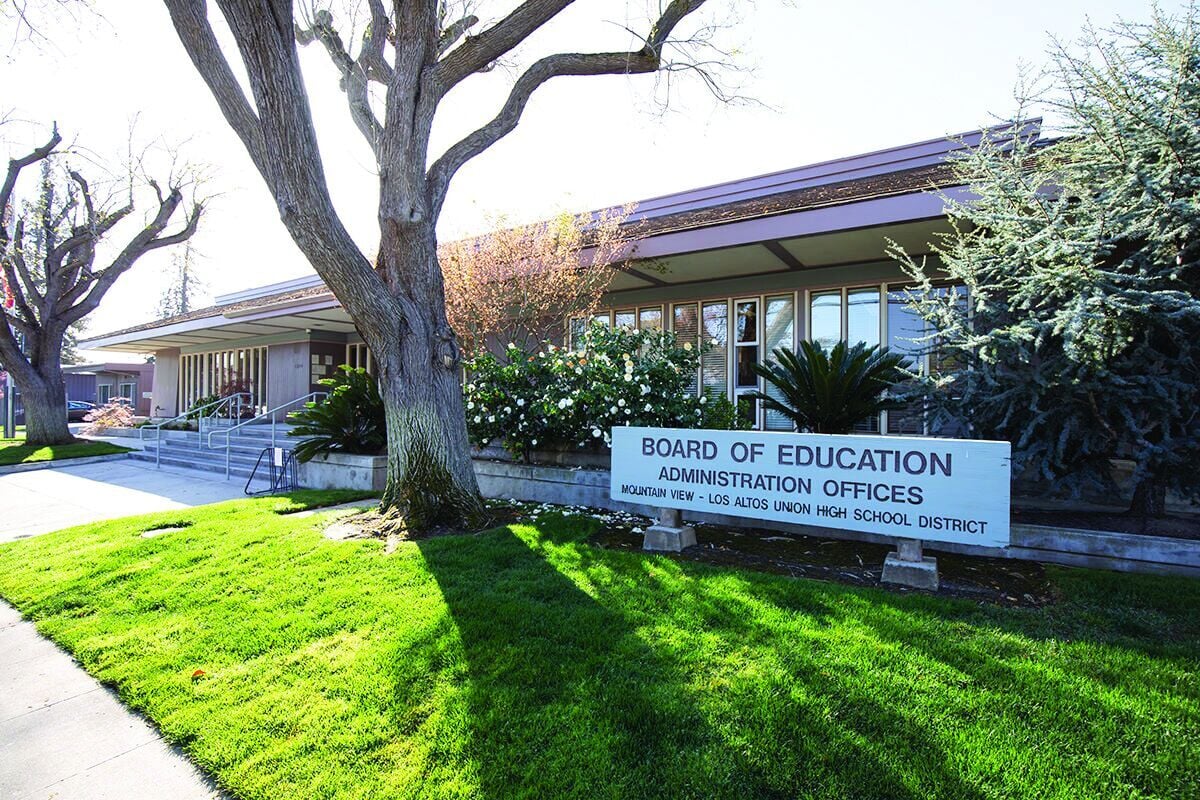
December 31, 2025 MVLA school district approves new graduation requirements Giuseppe Ricapito The Mountain View Los Altos Union High School District voted to modify the graduation requirements of the class of 2027 and beyond to reflect its truncated ethnic studies requirement. Originally Posted In: https://www.losaltosonline.com/schools/mvla-school-district-approves-new-graduation-requirements/article_453220d5-2430-4726-b787-b9b4b3c3af28.html < Back At a meeting on Dec. 15, the board unanimously voted to approve its updated graduation requirements. The change drops the social studies graduation requirement from 40 credits to 35 credits, reflecting the drop in the ethnic studies requirement from 10 credits to 5 credits. Elective credits are increased from 55 credits to 60 credits. Graduation requirements will remain 220 credits. The board of trustees voted 3-2 at an Oct. 27 meeting to cut the required social studies course, beginning with the 2026-2027 school year. Support for shortening the requirement came from trustees Vadim Katz, Catherine Vonnegut and Alex Levich. Trustees Esmeralda Ortiz and Thida Cornes cast the dissenting votes. Ethnic studies is currently a year-long course at the district that teaches students about the study of race, contributions of people of color in the United States and contemporary social movements. “This is what the board has already voted for,” Superintendent Eric Volta said at the meeting. District officials previously noted that the school sites may develop new offerings in social studies electives to avoid staff cuts accompanying the reduction of its ethnic studies requirement from a year to single semester. At the Dec. 15 meeting, district staff members offered their own recommendations to bridge the drop in social studies requirements. Dave Campbell, president of the district teachers association, presented a staff plan to recommend the requirements of one semester of ethnic studies and one semester of world studies for freshmen. “Adopting this sequencing aligns with community feedback requesting a robust and globally focused freshman experience,” he said at the meeting. “It reduces ethnic studies to one semester in a way that minimizes disruption for students and prepares them for more rigorous coursework in their sophomore year and beyond.” Campbell said the course coverage would follow the Holocaust, World War II and Latin American history. He said the option offered clear reliable course pathways rather than variable elective enrollment. Nate Bowen, social studies department coordinator at Mountain View High School, said at the meeting he hoped any changes would be the least disruptive to students and teachers. He referred to the proposal as “vital.” “It’s going to help bring my department much needed stability and a sense of normalcy,” he said of the proposal. Volta said previously that department heads and educators at individual school sites are developing the potential social studies elective options for eventual consideration by the district. A timeframe was not provided for board consideration of the teachers’ social studies proposal. Previous Next
- Debunking Myths | PeerK12
Facts Matter — a detailed, historically grounded PeerK12 analysis debunking common misinformation about the Arab-Palestinian narrative. Learn evidence-based historical context, documented peace offers, and factual rebuttals to widely spread claims about the conflict. Debunking Lies video library Need to brush up a bit on ancient history, world religions, global politics, local geopolitics, and archeology? We got you. Take a look at these videos below that debunk common "mainstream" lies and misconceptions and see for yourself.... >> Visit the full Travel Israel Channel . The Ethnic Cleansing of Jews within Muslim Countries (sub: DE, ES, FR, IT) Play Video Facebook Twitter Pinterest Tumblr Copy Link Link Copied Debunking Myths by Traveling Israel All Categories Play Video Play Video 09:27 7 Things pro-Palestinians Forgot to Tell You (...this war is not about land...) sub: DE, ES, FR, IT 7 Things pro-Palestinians Forgot to Tell You (...this war is not about land...) You hear so much about Israel and Gaza in the news. But there are a few things that pro-Palestinians forget to tell you. Here is a quick summary of the things you need to know. --- Follow me... ko-fi - https://ko-fi.com/travelingisrael Facebook - https://www.facebook.com/travelingisrael Instagram - https://www.instagram.com/travelingisrael/ Tiktok - https://www.tiktok.com/@travelingisrael1 Play Video Play Video 18:35 The Nazis and the Arabs of Palestine: the Untold (yet Documented) connection The Nazis and the Arabs of Palestine: the Untold (yet Documented) connection Or become a member and get early access to my videos as well as other perks! Support me on Ko - fi - https://ko-fi.com/travelingisrael Recommended books: Nazi Palestine - https://books.google.de/books?id=vjsLAqafdQ8C&printsec=frontcover&source=gbs_ViewAPI&redir_esc=y#v=onepage&q&f=false Genealogy of Evil: Anti-Semitism from Nazism to Islamic Jihad - https://www.amazon.com/Genealogy-Evil-David-Patterson/dp/0521132614 Mufti And the Fuehrer – Rise and fall of Hajj Amin Al-hussein - https://www.amazon.com/Mufti-Fuehrer-Rise-Fall-El-husseini/dp/B0000CMKI8 --- Follow me... ko-fi - https://ko-fi.com/travelingisrael Facebook - https://www.facebook.com/travelingisrael Instagram - https://www.instagram.com/travelingisrael/ Tiktok - https://www.tiktok.com/@travelingisrael1 Play Video Play Video 09:34 A Message to MUSLIMs from an ISRAELI. This is your biggest problem… A message to Muslims from an Israeli. This is your biggest problem… Like my content? Want to support my work and get smarter? Get my Jerusalem digital tours here - https://www.travelingisrael.com/shop-products/ Or become a member and get early access to my videos as well as other perks! Support me on Ko - fi - https://ko-fi.com/travelingisrael --- Follow me... ko-fi - https://ko-fi.com/travelingisrael Facebook - https://www.facebook.com/travelingisrael Instagram - https://www.instagram.com/travelingisrael/ Tiktok - https://www.tiktok.com/@travelingisrael1 Play Video Play Video 25:07 The Palestinian Refugee Problem Explained (Nakba and the Arab narrative) sub: DE, ES, FR, IT #nakba #vox Vox full video - https://www.youtube.com/watch?v=rGVgjS98OsU&t=4s&ab_channel=Vox Like my content? Want to support my work? Become a member and get early access to my videos as well as other perks! Support me on Ko - fi - https://ko-fi.com/travelingisrael 0:00 - Intro 1:00 - Deir Yassin intro 8:20 - The Partition plan 10: 55 - Plan D 14:10 - Deir Yassin 18:08 - The Battle of Haifa 20:35 - The Arab armies invaded Israel 21:09 - Palestinian refugees 23:00 - zoom out --- Follow me... ko-fi - https://ko-fi.com/travelingisrael Facebook - https://www.facebook.com/travelingisrael Instagram - https://www.instagram.com/travelingisrael/ Tiktok - https://www.tiktok.com/@travelingisrael1 Play Video Play Video 17:33 10 Questions PRO-Palestinians Can’t Answer (Can You Prove Me Wrong?) 10 Questions PRO-Palestinians Can’t Answer (Can You Prove Me Wrong?) Like my content? Want to support my work and get smarter? Get my Jerusalem digital tours here - https://www.travelingisrael.com/shop-products/ Or become a member and get early access to my videos as well as other perks! Support me on Ko - fi - https://ko-fi.com/travelingisrael 0:00 - intro 1:48 - The oppressed people of the Middle East 4:28 - Stolen Land 5:56 - Why wasn’t an independent Palestinian state established between 1948 and 1967? 7:58 - Egypt 9:24 - Genocide 9:52 - Blacks and Palestinians 13:03- The State of Palestine 14:01- The R-word 14:58 - Tell me who your friends are --- Follow me... ko-fi - https://ko-fi.com/travelingisrael Facebook - https://www.facebook.com/travelingisrael Instagram - https://www.instagram.com/travelingisrael/ Tiktok - https://www.tiktok.com/@travelingisrael1 Play Video Play Video 15:44 Genocide, ethnic cleansing and apartheid in the Middle East Like my content? Want to support my work? Please become a member and get early access to my videos and other perks! Support me on Ko-fi - https://ko-fi.com/travelingisrael --- Follow me... ko-fi - https://ko-fi.com/travelingisrael Facebook - https://www.facebook.com/travelingisrael Instagram - https://www.instagram.com/travelingisrael/ Tiktok - https://www.tiktok.com/@travelingisrael1 Play Video Play Video 16:35 Palestinians: The World's Most Privileged Refugees The PALESTINIANS are the most PRIVILEGED refugees in the World. UNRAW textbooks - https://unwatch.org/wp-content/uploads/2023/03/2023-Report-UNRWA.pdf https://www.impact-se.org/wp-content/uploads/UNRWA-Education-Textbooks-and-Terror-Nov-2023.pdf Support the communities - https://donate.kkl-jnf.org/plant-a-tree/ref/16/ --- Follow me... ko-fi - https://ko-fi.com/travelingisrael Facebook - https://www.facebook.com/travelingisrael Instagram - https://www.instagram.com/travelingisrael/ Tiktok - https://www.tiktok.com/@travelingisrael1 Play Video Play Video 11:58 The Jews NEVER Stole Any Land (But the Arabs did) Like my content? Want to support my work and get smarter? Get my Jerusalem digital tours here - https://www.travelingisrael.com/shop-products/ Or become a member and get early access to my videos as well as other perks! Support me on Ko - fi - https://ko-fi.com/travelingisrael --- Follow me... ko-fi - https://ko-fi.com/travelingisrael Facebook - https://www.facebook.com/travelingisrael Instagram - https://www.instagram.com/travelingisrael/ Tiktok - https://www.tiktok.com/@travelingisrael1
- Opinion: Don’t Be Fooled - ‘Free Palestine’ Is a Call for Ending Israel | PeerK12
October 19, 2023 Opinion: Don’t Be Fooled - ‘Free Palestine’ Is a Call for Ending Israel Brad Bernstein Don’t just take my word for it. Do your own research: search the internet for sources where “Free Palestine” is used to protest in favor of the establishment of a Palestinian State side-by-side with a Jewish State. Go ahead, I’ll wait… Originally Posted In: https://timesofsandiego.com/opinion/2023/10/19/dont-be-fooled-free-palestine-is-a-call-for-ending-israel/ < Back There has long been a debate if anti-Zionism is the same as antisemitism. This is not a new debate, but recent events prove why it is most certainly the same. The practice of Jew-hatred goes back millennia, and has manifested in many ways, but it has always been the same Jew-hatred our ancestors experienced. The widely accepted definition of antisemitism, as defined by the International Holocaust Remembrance Alliance and adopted by more than 40 United Nations member states including the U.S. Government, includes “the targeting of the state of Israel, conceived as a Jewish collectivity.” This definition is important because Jew-haters use the term “Zionism” and “Israel” interchangeably, when in reality they are referring to the Jewish people as a whole . For example: anti-Zionists justify their sentiment as “anti-colonialism,” “anti-oppression,” and “anti-racism.” On the surface, all of those might seem like prudent social justice causes (depending on your nuanced political opinion), however they are all lies rooted in antisemitism and all with one common: hatred. More specifically: Jew-hatred. Each of these baseless claims against Zionism and Israel is a one-to-one copy/paste from ancient antisemitic tropes that have been used generation after generation to justify and legitimize the persecution and murder of Jews. It serves as their proof for why it’s actually necessary to exterminate Israel (ie. Jews) in order to keep the world safe for all non-Jews; and, in fact, these heinous acts of atrocities must not even be questioned by their followers. In 2017, we were collectively appalled when we witnessed neo-Nazis marching in Charlottesville where white nationalists chanted, amongst other vile epithets: “The Jews will not replace us.” There was broad condemnation of what happened in Charlottesville as racist and unacceptable, and again in Poway and Pittsburgh , and that same condemnation should be applied to the Free Palestine marches. Through some perverted twist of reality that we’ve unfortunately seen in previous iterations throughout history, Israel is being blamed for the massacre of its own civilians by the pro-Palestinian movement, cloaked under the social justice phrase of “Free Palestine.” At rallies taking place on college campuses and in cities around the world we hear chants of “From the river to the sea, Palestine shall be free!” This is not a rallying cry for a two-state solution and it is not about freeing an oppressed group to live peacefully in the world order. Otherwise, a more appropriate slogan would be: “Free Palestine from Hamas,” a designated Foreign Terrorist Organization that has profited to the tune of billions of dollars in aid from the US, Europe, and the Gulf States while their citizens live in squalor. No, it’s about a one-state solution that is free of Jews. The chant specifically calls to rid the land of Israel from the Jewish people . The Hamas charter explicitly states to “fight Jews and kill them” and to “obliterate” Israel “in the name of Allah.” Their mission became as clear as ever this past week when terrorists raped women and children, murdered parents in front of their children and murdered children in front of their parents, and burned and decapitated babies. The murder spree was so indiscriminate that they killed Palestinian peace activists, Thai and Filipino workers, and Arabs. The terrorists also kidnapped and took hostage innocent babies and children, young adults at a peace concert, the handicapped, the elderly (including Holocaust survivors), and Israeli soldiers. Don’t just take my word for it. Do your own research: search the internet for sources where “Free Palestine” is used to protest in favor of the establishment of a Palestinian State side-by-side with a Jewish State. Go ahead, I’ll wait… And while you are researching, find one source that will even simply denounce the barbaric atrocities committed by Hamas last week. Again, I’ll wait… So when you hear the chant “Free Palestine” you are hearing people supporting these brutal and inhumane, racist, Jew-hating, murderers who have done some of the most horrific acts ever documented. “Free Palestine” might sound like a simple resistance movement. But to me it’s the same as “the Jews will not replace us.” ---- Brad Bernstein lives in Carmel Valley where he works in the technology sector. He is the son of immigrants who left South Africa during apartheid. He is also a former IDF soldier who lived in Israel for 10 years. Previous Next
- Jewish Holiday Letters | PeerK12
Letter templates to send to teachers to request NOT to schedule tests or important events on Jewish holidays. Jewish Holidays Send a Letter to Your Teacher About Tests on Rosh Hashanah, Yom Kippur, and Other Important Dates RESECHEDULING AN EXISTING TEST ON YOM KIPPUR Copy and paste the below letter into your email and then customize it to ask your teacher to reschedule a test that is set for Yom Kippur this Thursday, October 2nd: Subject: [Topic ] test scheduled for Yom Kippur this Thursday, October 2, 2025 Hi [teacher name ], My son/daughter, [name ][ID # if applicable ] is in your [# ] period [subject ] class. I learned over the weekend that there is a test scheduled for this Thursday October 2nd - which is Yom Kippur - the holiest day of the year for the Jewish people . Scheduling a major test on Yom Kippur forces my child to choose between faith and academics and adds another burden of jumping through test make-up hoops no other students face. I respectfully request that the planned test please be rescheduled to a non-holiday date so my son/daughter is not unfairly disadvantaged or penalized for observing the Holiest day in the Jewish Faith. Legal protections & common practice: Title VI requires schools to prevent discrimination against Jewish students (protected as a group sharing ancestry/ethnicity). California Department of Education Inclusive Practices to Support All Students’ Cultural Observances, Fall 2025 California Department of Education Calendar of Religious Dates to Avoid School Scheduling Conflicts In California, Ed. Code §§ 48205 & 46014 excuse religious observance and require equitable, no-penalty make-ups for full credit. For future reference: In order to avoid future scheduling conflicts - here is a link to the religious dates calendar for 2025 provided by the California Department of Education with the list of the holiday dates to avoid for the remainder of 2025. Thank you for ensuring [student's name] receives the same consideration afforded to other protected groups. Please confirm the revised plan. Sincerely, [Your Name] [Phone/Email] Subject: Yom Kippur—No exams and equitable make-ups for [Student Name] Dear [Teacher Name] , Yom Kippur on [date] is the holiest day for the Jewish people. Scheduling tests that day forces Jewish students to choose between faith and academics—an unequal burden others don’t face. Under Title VI , schools must prevent discrimination against Jewish students (shared ancestry/ethnicity). In California, Ed. Code §48205 and §46014 excuses religious observance and requires fair make-up for full credit. Major districts already avoid assessments on these days or provide non-punitive, equivalent make-ups (e.g., both LAUSD and NYCPS close for Yom Kippur; Montgomery County, MD issues explicit guidance). My request: Do not schedule tests/quizzes/graded deadlines on Yom Kippur. If something is already set, provide a no-penalty, equivalent make-up (same format/weight), offered during regular school hours—not lunch/zero-period/after-hours. Please confirm the plan for [Student Name] . Thank you for ensuring equal treatment. Sincerely, [Your Name] [Phone/Email] REQUEST THAT TESTS not to be SCHEDULED on yom kippuR Copy and paste the below letter into your email and then customize it to request that tests not to be scheduled on Yom Kippur and make-ups are to be equitable.
- San Dieguito board talks next steps in addressing Hitler photo at Carmel Valley school | PeerK12
October 18, 2022 San Dieguito board talks next steps in addressing Hitler photo at Carmel Valley school Karen Billing District will hold community forums, staff training around antisemitism and create a new superintendent committee Originally Posted In: https://www.sandiegouniontribune.com/2022/10/17/san-dieguito-board-talks-next-steps-in-addressing-hitler-photo-at-carmel-valley-school/ < Back The Jewish community in the San Dieguito Union High School District is speaking up after a picture of Hitler was posted in a seventh-grade social studies classroom at Carmel Valley Middle School, alongside world leaders like Martin Luther King Jr., John F. Kennedy and Winston Churchill. Members of Partners for Equality and Educational Responsibility (PeerK12) rallied outside of the board’s meeting on Oct. 13 demanding meaningful action against antisemitism: “We want action, not words,” said parent Tamar Caspi, echoing the message on many of their protest signs. On the agenda that night was the district’s response to the incident: A commitment to “repairing the hurt by holding ourselves accountable” and creating a safe-school culture. The district plans to organize several listening and learning sessions across the district to hear from a broad group of parents, students and Jewish leaders about what the community needs; to provide additional anti-bias training for faculty and staff specifically around antisemitism; and to form a new superintendent’s committee focused on prevention and awareness. The board will determine the makeup and focus of the superintendent committee at its November meeting. The next steps for this new committee were debated at length, whether to form a committee immediately as SDUHSD President Mo Muir and Vice President Michael Allman advocated for, or to first go to the community and experts and then form a committee, as preferred by Trustees Katrina Young and Julie Bronstein. Before they could give direction, outbursts from the audience forced the board take a recess a little after 10 p.m., over five hours into that night’s meeting. Bronstein felt it was premature to establish the committee that night as she wanted to gather more information and make sure the committee is done with purpose and is well-defined based on best practices. “We have a community that’s hurting right now, they want to be listened to,” Young said, noting that the community’s input should steer the agenda for the committee if they truly want to put action behind words. Both Muir and Allman were frustrated at the lack of action that night, what they felt was “kicking the can down the road”. While the committee will be determined next month, the board agreed to start this week with Bronstein and Allman meeting with Associate Superintendent of Educational Services Bryan Marcus about the goals for this committee. “It’s a start,” Allman said. “We just have to start.” “It tells our parents that we do hear you,” Muir said. “I’m here for action, I’m done with the talking.” Community voices Parent Roy David said it was his 12-year-old son who raised the alarm about the portrait of Hitler on the wall of his classroom. He criticized the school principal for making excuses for the teacher and for failing to quickly take meaningful action. “Any school teacher in America who hangs Hitler on the wall is not fit to teach and should be fired,” said David. “Any history teacher who thinks the most teachable aspect of Hitler is that he had strong leadership abilities is not fit to teach.” Parents said the district botched the response, that there was a lack of action and accountability and that an apology should have been made to the student and his parents. At the meeting, Torrey Pines High School junior Noa Klaristenfeld shared her own personal experiences with antisemitism at school which has included comments about her faith, students making Holocaust jokes to “try to be edgy”, and swastikas drawn on the bathroom walls on her campus last year. “That ignorance hurts,” she said. She believes the ignorance stems from a lack of education surrounding the history of minority groups. She said in the eighth grade when her class read “The Book Thief”, a book about a German teen during World War II, she was shocked that many of her classmates weren’t even aware of the Holocaust. “To me and to many others this is not something that happened a long time ago,” Noa said. “People lack the understanding to express empathy and here we have the opportunity to introduce more knowledge that will foster understanding.” Speakers said that the antisemitic graffiti, symbols of hate that children feel comfortable using, are a clear sign that there needs to be specific education on antisemitism. As one parent pointed out, the April 2019 shooting in a Poway synagogue was perpetrated by a 19-year-old raised in San Diego in the 21st century, not Germany in the 1930s. “Hate can grow bigger than we think,” said parent Keren Benmosh. “We need to build a society that is more committed to the value of human dignity.” As a Jewish woman who has been active in her synagogue and Jewish causes throughout her life, Trustee Bronstein said she stands in solidarity with all of the members of the Jewish community. She has family members and friends who were personally impacted by the Holocaust and she was deeply troubled when she heard about the situation, immediately reaching out to hear what actions the school had taken. “I’m strongly opposed to the display of any Nazi-related material in our classrooms… zero tolerance for that,” Bronstein said. Interim Superintendent Tina Douglas said the district takes these matters seriously: The incident has been investigated and addressed, but as it is a personnel issue and a confidential matter, there were no more details she could share publicly. Over the past week, Muir, Bronstein and Douglas met with representatives from Congregation Beth Israel, Temple Beth Am, The Jewish Federation of San Diego County, The Shoah Foundation based in Los Angeles, the Anti-Defamation League San Diego and have spoken with many parents. Bronstein said they were counseled on addressing systemic issues of bias and antisemitism. “I will continue to work to ensure our teachers receive education and the anti-bias training needed so all Jewish and marginalized students find all schools to be welcoming and safe environments,” Bronstein said. With the committee, Allman was hoping for a group that has real power, to come up with actions and recommendations on accountability and oversight, alternative training for staff, as well as more curriculum transparency—he said many members of the Jewish community want to know how the Holocaust is being taught. He also wanted to determine what happened at Carmel Valley Middle School—he said it was troubling that the picture had been up since the first day of school and no one else ever questioned it. He wanted to understand the lesson that was going to be taught, as per the teacher’s website her class covers geography and history only up to 1914. “It was very disappointing what happened and I think we need to accomplish a number of things so we can make real and lasting change,” Allman said. An area where the board did have some slight consensus was for an ombudsman—a district-level position that would be responsible for investigating and addressing allegations of discrimination and harassment. Last year, 250 Jewish students signed a letter to the board asking them to show support with a resolution addressing antisemitism after experiencing a rise in antisemitic acts, being blindsided by standardized testing during Rosh Hashanah and experiencing anti-Israel and anti-Zionism rhetoric in the classroom. In November 2021, the board passed Allman’s resolution addressing antisemitism and affirming the value of Jewish students, faculty, staff and families in a 4-0 vote (Young abstained as she said she needed more information and wanted more student and community voices to be considered for the language). “We had specific actions in the antisemitism resolution we passed…and they just didn’t happen,” Allman said. Allman said had there been an ombudsman, the parent might have felt like he had an advocate at the district and that could’ve prevented him from feeling that his best course of action was to give a media interview. As far as curriculum transparency, Bronstein pointed out that the district has a Parent Curriculum Advisory Committee, which provides a deeper understanding of curricular offerings instruction and professional development. Additionally, course profiles and materials are also online for every school’s courses and parents have access to google classrooms. In his comments, Assistant Superintendent Marcus thanked the student for coming forward. “If we don’t encourage our students to acknowledge that something is not right in the classroom, then we can’t learn and we can’t grow,” Marcus said. “Just like our students in the classroom, we never stop learning and we never stop growing…All of us need to humble ourselves ….acknowledging that things happen and we need to learn from them.” Previous Next
- Detractors | PeerK12
Explore PeerK12’s ‘Detractors’ video collection - hard-hitting, classroom-ready content exposing anti-Jewish bias, ideological indoctrination, and misinformation in K–12 schools. These videos empower educators, parents, and students to recognize and confront intolerance and defend Jewish civil rights in education. In their own words VIDEO LIBRARY In their own words VIDEO LIBRARY In their own words VIDEO LIBRARY In their own words VIDEO LIBRARY Bringing The War Home Play Video Facebook Twitter Pinterest Tumblr Copy Link Link Copied People's Conference for Palestine | May... All Categories Play Video Play Video 01:11:08 Opening Keynote | People's Conference for Palestine We are in an unprecedented moment in history. As we bear witness to the ongoing and brutal genocide against the Palestinian people, we are also part of building a mass movement that is committed to struggling for Palestinian national liberation. The demands for an end to the genocide, lifting of the siege of Gaza, an end to all US aid for Israel, and a free Palestine echo in the streets, in classrooms and universities, disrupting the halls of government and the daily lives of all genocide-profiteers. All backers of Zionism, Israel, and US imperialism have been put on notice. The perpetrators of genocide and occupation have names and faces, and the masses of people around the world stand against them in the millions. The movement for Palestine has never been stronger: but with this strength comes a monumental responsibility. This moment calls on us to strengthen our relationships, our strategies, our tactics, and our unity for the struggle ahead. We must build a shared assessment of the moment, and chart out the next phase of our struggle. The Palestinian people have been fighting for liberation for over 100 years, and are committed to continuing this fight generation after generation, until victory. Join us as organizations, collectives, movement leaders, community members, students and intellectuals, artists and cultural workers, and activists for a three-day convening to reflect, exchange, and strengthen ourselves and our fight for a free Palestine. Keynote by Sana’ Daqqa Sana’ Daqqa is an activist, journalist, and the wife of the martyred Palestinian prisoner Walid Daqqa. She has been a longtime activist in struggle to free Palestinian political prisoners, and is an accomplished journalist and analyst on issues of anticolonialism and political strategy. Sana’ and Walid gave life to their daughter Milad through the smuggling of sperm, and she has become a symbol of hope and resilience for the Palestinian people facing forced separation and imprisonment by the Occupation. Sana’ is currently leading a campaign to release the body of the martyr Walid Daqqa, which continues to be held illegally in Zionist prison until today. Play Video Play Video 03:02:51 Zionism and US Imperialism | People's Conference for Palestine Since its inception, Zionism has enjoyed significant support from imperial powers—first the British who colonized and delivered Palestine to Zionist settlers, and then the resource-hungry United States, keen on expanding its scope of power across the world. In exchange for acting as a proxy power for advancing US interests in the region, the Zionist project receives unconditional political and military aid. The mass movement for Palestine has exposed the shared agenda between US imperialism and Zionism throughout the past seven months, firmly charging the United States with the genocide of the Palestinian people. This session will deepen our analysis of the so-called “special friendship” between the U.S. and Israeli State as one rooted in racist state violence domestically and global domination abroad. Speakers: Richard Becker, Sara Kershnar, Yara Shoufani, Rabab Abdulhadi Moderator: Layan Fuleihan Play Video Play Video 00:40 The Movement for Palestine in North America ï½ People's Conference for Palestine Play Video Play Video 01:28:44 The War on Palestine | People's Conference for Palestine The Palestinian people have experienced endless warfare for over a century, yet never before have Palestinians endured a genocide of such catastrophic proportions. While this phase of the war on Palestine demonstrates a continuity of Zionist land-theft, imperialist collusion, and systematic annihilation of Palestinian life, it also presents important transformations within the Palestinian, Israeli, regional, and international political fields. This discussion will reflect on the lead-up to and contemporary impact of the war on Palestine, highlight the conditions on the ground, particularly in the occupied Gaza Strip, and offer insights on the stakes of the current moment for the future of Palestine and the Palestinians. Speakers: Ghassan Abu Sitta, Mustafa Barghouti, Jehad Abu Salim, Taher Herzallah Moderator: Laura Khoury Play Video Play Video 01:15:19 Sana' Daqqa: The Palestinian Prisoners' Movement & the Struggle for Liberation Sana’ Daqqa is an activist, journalist, and the wife of the martyred Palestinian prisoner Walid Daqqa. She has been a longtime activist in struggle to free Palestinian political prisoners, and is an accomplished journalist and analyst on issues of anticolonialism and political strategy. Sana’ and Walid gave life to their daughter Milad through the smuggling of sperm, and she has become a symbol of hope and resilience for the Palestinian people facing forced separation and imprisonment by the Occupation. Sana’ is currently leading a campaign to release the body of the martyr Walid Daqqa, which continues to be held illegally in Zionist prison until today. Play Video Play Video 01:32:37 People's Conference for Palestine | The Student Intifada: Zionism off Our Campus In April, students across North America took the solidarity movement by storm. Over one hundred encampments erupted in a matter of days, lifting the movement to new heights and setting the example of commitment to the struggle. The demands of the encampments revealed the deep linkages between ruling class institutions and the Israeli settler state, and their Popular Universities exposed the hypocrisies of higher education in the imperial core. The brutal suppression that followed is only a demonstration of the pressure the student movement was able to exert over the ruling class. This session will engage student organizers from across the world in a discussion on the strategies and tactics of the student intifada, the lessons learned, and the future of the student movement against the genocide and for a liberated Palestine. Speakers: Dawod Al-Taamari, Ibtihal Malley, Monty Rumbold, Ghaied Hijaz Moderator: Nidaa Play Video Play Video 01:37:55 How do Movements Achieve Transformation? | People's Conference for Palestine Historically, anti-imperialist and anticolonial liberation movements have shown us the importance of building sustainable political organizations. In this new phase of our movement, Palestinians in the North American diaspora and solidarity organizations must understand and adapt to the protracted nature of our struggle for liberation. This workshop will provide a dialectical comparative analysis of the North American anti-war movement in relation to the contemporary Palestinian liberation movement. What conditions have led us to this new phase, and how do we utilize this moment of heightened contradictions to advance our struggle for liberation from within the imperial core? Speakers: Wisam Rafeedie, Vijay Prashad, Hana Masri Moderator: Brian Becker Play Video Play Video 01:27:42 Palestinian Resistance and the Path to Liberation | People's Conference for Palestine Since the early 20th century, the Palestinian national liberation movement has cultivated a resistance project that sought to unify the Palestinian popular classes around shared vision and strategy. The various conditions facing the Palestinian people in the struggle against imperialism and colonialism—from exile to occupation, from siege to political isolation—has required creative forms of resistance. At the heart of the strategy for Palestinian liberation is the conviction that the struggle must transform the whole of society on social, political, psychological, and spiritual levels for it to succeed. More recently, the Palestinian resistance has proven itself resourceful and resilient in the face of conspiracies to liquidate the Palestinian struggle through normalization. This discussion will explore the advancements made by the Palestinian resistance over the last decade, demonstrating the role of the popular cradle in sustaining the Palestinian struggle. Speakers: Tara Alami, Raja Abdelhaq, Abdaljawad Omar, Jeanine Hourani Moderator: Sarah Abdelshamy
- Carlsbad Unified approves budget at special meeting with board president absent | PeerK12
June 25, 2025 Carlsbad Unified approves budget at special meeting with board president absent Kasia Gregorczyk Local parents say Kathy Rallings has been controversial for how she treats other board members during meetings and her suggestion to take more than $3 million out of the district reserve funds. Originally Posted In: https://fox5sandiego.com/news/local-news/north-county/carlsbad-unified-approves-budget-at-special-meeting-with-board-president-absent/ < Back CARLSBAD, Calif. (FOX 5/KUSI) — The Carlsbad Unified school board held a special meeting Wednesday to approve the district budget, but the board president was absent. Local parents say Kathy Rallings has been controversial for how she treats other board members during meetings and her suggestion to take more than $3 million out of the district reserve funds. Ahead of that special meeting, a rally was held calling for accountability and for Rallings to be removed as board president. “I was shocked at the tone of the meetings, the bullying, the incivility in those meetings by the board president ,” said Teressa Wallace. “Everybody can disagree, but the decorum needs to matter. This is a professional setting,” said Jeff Adams. Beyond behavior, concerns have been raised about Rallings’ suggestion to move more than $3 million out of the district’s reserve funds with no specific way to spend the money. Members of the public and the board disagreed, citing uncertainty at the state and federal level for education funding. “Staff has recommended that we keep the reserves in place until we know what the budget is going to look like and that’s one of the main issues why we don’t want this $3 million transferred out of the reserves. We want to keep that to make sure we can keep our teachers and maybe hire a couple more if we have the room to do that,” explained Scott Davison, Executive Director for the Carlsbad Education Alliance . With disagreement over the budget, the special meeting was scheduled, but Rallings did not show up. She did provide a statement that reads in part: “I have consistently advocated for these dollars to be invested in our students and classrooms, rather than sitting unused in an account for over a decade. It is difficult to justify the existence of a $3.1 million reserve when we are telling parents and teachers, they need to buy basic classroom materials like tissue paper and glue sticks, or when the district staff claims, they can’t afford to reduce class sizes or counselor caseloads.” Ultimately all four board members present voted unanimously to pass the budget without withdrawing the money Rallings requested. Previous Next
- The ADL’s Medicine Is Causing the Disease | PeerK12
October 26, 2025 The ADL’s Medicine Is Causing the Disease Joel Finkelstein Frames that divide the world into the oppressors and the oppressed create 15 times more antisemites while reinforcing sectarian division and hate on both the left and the right. The cure is a return to the universalist values on which America was founded. Originally Posted In: https://www.tabletmag.com/sections/news/articles/adl-medicine-causing-disease < Back Oct. 7 is behind us, but the moral wreckage it revealed is not. On campuses and in newsrooms, moral clarity has dissolved into factional reflex. The speed of that collapse has exposed something long in the making: a society trained to sort every question through the logic of identity and power. In recent years, Americans have been told that justice lives in the arithmetic of oppression. We built institutions around that belief. It promised fairness but produced suspicion. When real moral tests arrived, those suspicions split the country into tribes instead of citizens. What began as a language meant to protect the vulnerable hollowed out the Democratic Party itself, wrenching Jews from a coalition that once defined liberal America. The same moral logic now corrodes the right, where a counterfeit version of patriotism exalts grievance politics and sectarian resentment. Across both extremes, identity has replaced citizenship. The Anti-Defamation League has become the most visible symbol in the Jewish world of that shift. In schools across the United States, students are now taught to “challenge bias” and “explore identity” through the Anti-Defamation League’s No Place for Hate curriculum. The program asks children to examine their “unconscious prejudice,” map their place in “systems of oppression,” and reflect on how “intersecting oppressions” shape their worldview. Middle schoolers complete assignments such as the “Identity Iceberg,” which invites them to reveal the parts of themselves that lie “below the surface.” What was once a movement to fight antisemitism has evolved into an educational framework built on the language of DEI. Its central lesson is not moral conviction but self-classification within hierarchies of power. In two national studies, participants exposed to the ADL’s anti-oppression messaging grew more defensive and in fact expressed more antisemitism than they had prior to being “educated.” Those results mark more than the failure of one organization. They signal the exhaustion of an era. The frameworks that claimed to cure bias are now being proven by data to deepen it. If we want to rebuild moral coherence, we need a new paradigm rooted not in grievance but in shared human values, the same ideals that helped shape the American experiment and long sustained Jewish moral life in this country. For more than a decade, schools and corporations have adopted what they call the anti-oppressive framework, the belief that morality lives in the struggle between the oppressors and the oppressed. The goal of this approach was ostensibly to eliminate bias. The result has been rising suspicion and hostility and the fracturing of the once-robust American middle into warring sectarian tribes. Our research tested how the framework of oppressed and oppressors works in practice to reduce bias. Partnering with Rutgers Social Perception Lab, in a study titled “Instructing Animosity,” we exposed thousands of participants to training materials drawn from anti-racist, anti-Islamophobia, and anti-casteist curricula. Across all three domains, the pattern was the same. People who read those texts became more likely to believe that racism or prejudice had occurred when there was no evidence of it. Perceptions of microaggressions in neutral situations rose by roughly 30%, and willingness to punish others for imagined offenses increased sharply. The interventions reproduced the same psychological profile found in people who score high on measures of authoritarianism: suspicion, intolerance, and punitive impulse. The effect was not tied to any group or cause; it was tied to the frame itself. When we applied the same method to the ADL’s antisemitism curriculum, the results were even clearer. Participants who read ADL materials reported much higher irritation and stronger feelings of being attacked than those who read neutral or values-based text. Their written responses contained 15 times more antisemitic statements than those in the control conditions. Both studies revealed the same underlying process: Exposure to anti-oppressive rhetoric increased defensiveness and moral reactivity. However, the direction and expression of hostility differed greatly between the anti-racism and the antisemitism studies. While exposure to anti-racist materials led subjects to reproduce the moral and political orientation of the materials themselves - condemning racism, even when it wasn’t there - exposure to the ADL’s materials produced the exact opposite effect, rendering subjects 15 times more hostile to Jews than they had been before. Why do materials structured in the same way produce such radically opposite effects when the “oppressed” group is Jewish? One plausible interpretation of their differences draws on Jonathan Haidt’s moral-foundations theory. Anti-oppressive interventions may cue a coalitional mode of moral reasoning, shifting the question from What is good? to Who are the good people? . In this frame, moral emotion is directed toward identity rather than principle, and the language of justice becomes a search for the righteous and the condemned. In anti-racism contexts, where the narrative clearly identifies an oppressor and where public sanction reinforces that boundary, hostility finds a sanctioned outlet. Condemnation of the “bad group” is socially rewarded and even expected, while reproducing “racism” results in social sanction and even the possibility of being targeted with violence. However, in the case of antisemitism, that same moral circuitry operates in a very different social and political context. Jewish life, historically organized around education and civic participation rather than mob politics, lacks a stable coalition capable of enforcing moral standing through collective power. No one is actually afraid of being punished by Jews—or being physically confronted by them. The mob logic never coheres into protection but instead amplifies vulnerability. Each round of moral accusation deepens the perception of instability and, paradoxically, blames Jews for the precarity itself. These hypotheses remain tentative but suggest that where moral sanction is unstable, anti-oppressive frames do not resolve into coherent moral conflict; they multiply it, producing a self-reinforcing cycle of reactivity and blame. The same moral logic that governs DEI programs has filtered into national institutions and street movements. It teaches people to read conflict as oppression, disagreement as violence, and identity as destiny. Once that logic takes hold, it spreads suspicion through every social bond, whether on the left or on the right. The ADL did not create this framework, but it amplified it. While hostility toward Jews and other groups escalated, its own programs continued to describe “whiteness” as privilege and to problematize mainstream organizations like Turning Point USA with accusations of extremism. This year, the FBI ended its partnership with the ADL, stating that it would not work with political fronts posing as watchdogs. That decision confirmed what the data already suggest. The old paradigm has exhausted itself. The public no longer trusts it, and the evidence shows why. The data show the medicine is worse than the disease. The same science that exposes the damage done to American Jews and the wider society by the ADL’s bias education programs also points toward a remedy: a moral vocabulary rooted in the universal ideals that once anchored both Jewish and American life. The founders of this country made a discovery so simple and so radical that it still startles the modern mind. They declared that human beings are endowed by their Creator with inalienable rights. It was a moral revolution that broke every hierarchy of power and taught that dignity does not come from ancestry or position but from the soul itself. From that truth flows not only moral right but also moral responsibility, the duty to see that same dignity in others. We tested what happens when people are reminded of that principle. In our experiment, participants read a short essay titled “Universal Human Values. ” It spoke of fairness, honesty, conscience, and the shared duty to act with integrity. It argued that goodness does not come from fear or ideology but from conviction. Compared with those who read anti-oppressive or DEI-based texts, participants exposed to this values-based message showed no rise in defensiveness, antisemitism, or toxicity. They rated the message as 20% more meaningful, 19% less exaggerated, and 17% less biased. They were also 12% less likely to describe Jews as racist. The difference was visible in their words. “It reminded me that compassion is a shared duty as well as a personal decision,” one participant wrote. Others described feeling hopeful and inspired to act with integrity. The same science that revealed how anti-oppressive messaging breeds resentment now shows that shared moral language restores connection. The evidence points to one conclusion: Moral education must return to universal American values. That means rebuilding the institutions that teach it. The same voices that sold identity politics cannot credibly offer its cure. It is not believable that Black Lives Matter can now deliver moral coherence, or that the ADL is the best candidate to undo the divisions it helped create. Their frameworks were built around hierarchy and guilt. They cannot now lead a movement based on equality and responsibility. The challenge ahead requires constructing new institutions rooted in both data and moral truth, institutions that see the human being before the category. America’s original moral discovery still waits for completion. It begins with the same conviction that founded the nation and animated its prophets: that we are created equal and are therefore accountable to one another. ---- Joel Finkelstein is the co-founder and chief science officer of the Network Contagion Research Institute, which innovates methods in social cyber sciences to better meet threats in the information age. He is a graduate of Princeton University, where his doctoral work focused on the Psychology and Neuroscience of addiction and social behavior. He currently directs the Network Contagion Lab, at the Miller Center for Community Protection and Resilience at Rutgers University. Previous Next
- Podcasts | PeerK12
Our recommendations for podcasts and books that will help you learn more about the issues we are facing in American education. Podcasts, Webinars & Books We Recommend BACK TO NEWSROOM Resources News Podcasts Blog PeerK12 PODCAST APPEARANCES PeerK12 Webinars & Podcasts PeerK12 Webinars & Podcasts Play Video Share Whole Channel This Video Facebook Twitter Pinterest Tumblr Copy Link Link Copied Search videos Search video... Now Playing California’s Antisemitism Bill Explained plus Hostages Release Breaking News 01:27:11 Play Video Now Playing PARENT POWER: Depoliticizing the Curriculum 01:02:13 Play Video Now Playing PeerK12 Advocacy after October 7th w/ Nicole Bernstein & Tamar Caspi [Part 2] 01:59:20 Play Video Now Playing Ethnic Studies Live Webinar 9 4 25 01:55:31 Play Video recommended podcast shows The podcasts below are some of our favorites and discuss multiple aspects of the situation we're all facing at the crossroads between Jewish life, Israel, and the American K-12 ecosystem. Conversations presented below are meant to help you learn about the various perspectives, policies, and challenges that we face in our mission to rid the K-12 environment of all institutionalized Jew-hatred and help protect all students, parents, teachers, administrators and communities from the dangers of indoctrination in K-12. Adventures with Dead Jews Dara Horn LISTEN Dara Horn guides listeners through the outsized role that dead Jews play in other people’s imaginations— and sometimes still play in ours. With strange, dark, hilarious, and fascinating stories, listeners are guided through some of the strangest corners of Jewish history, exploring how the popular mania for dead Jews warps our understanding of both past and present. Ask Haviv Anything Haviv Rettig Gur LISTEN A podcast that focuses on what you want to learn and discuss. Nothing is off limits... big and painful things, and also beautiful and fascinating things, wars and identities and painful history. And also more light-hearted things. Humor matters, especially when facing tough subjects. Breaking History Eli Lake LISTEN Sometimes the news moves so fast, you have to look closely to know if you’ve seen it before. And that’s what this show is about. Breaking History breaks down the news, by breaking down history. George Santayana wrote, “Those who do not remember the past are condemned to repeat it.” Tune in to Breaking History to resist the repetition. Call Me Back Dan Senor LISTEN Presenting the challenges and dilemmas facing Israelis to a global audience. Here I Am Shai Davidai LISTEN Here I Am with Shai Davidai explores the rising tide of anti-semitism through discussions with the top Jewish voices in this ongoing battle. I'm That Eitan Chitayat LISTEN Whether through work or at play, I've had the good fortune of meeting some pretty prolific people. On 'I'm That', we have a chat about who they are, what they do, and why. It may be deep. Profound. Funny. Many times, all of the above. But it's always honest. In Doctrine Nation Josh Weiner LISTEN The podcast hosted by Josh Weiner airs bi-weekly and shares the stories of students, parents and educators to shed light on what's happening in K-12 education. New Discourses James Lindsay LISTEN Pursuing the light of objective truth in subjective darkness. Re-Education Eli Lake LISTEN On the Re-Education, Eli Lake challenges common narratives the mainstream media and others push. From comedy to collusion, and disinformation to disarray, Eli unpacks what you know—or think you know—about the world around you. The American-Israeli Podcast Dillon Hosier LISTEN The Israeli-American Podcast explores the intersection of American and Israeli perspectives on policy, identity, and civic action. Hosted by leaders from both communities, the show features timely conversations on issues like antisemitism, the U.S.–Israel alliance, Holocaust education, and more. Grounded in ICAN’s mission, each episode delivers engaging dialogue that informs, inspires, and empowers listeners to take action. We Should All Be Zionists Einat Wilf & Blake Flayton LISTEN Dr. Einat Wilf and columnist Blake Flayton discuss the themes of each essay from Dr. Wilf's collection and how they apply to Israel and contemporary Jewish life. Listen for insightful conversation on politics, conflict, peace, religion, revolution, past, present , and future. BOOKS WE recommendeD READ READ READ READ READ READ READ READ
- Ethnic Studies | PeerK12
Explore PeerK12's comprehensive resources on Ethnic Studies in K-12 education. Understand its ideological origins, potential impacts, and learn how communities can advocate effectively protect their students from radical ideologies, ensure transparency in their school districts, and provide unbiased curriculum for their children. Ethnic Studies in K–12: What’s Really Happening & Why It Matters Ethnic Studies is being introduced into classrooms across the country; often without transparency, oversight, or accountability. At PeerK12, we’ve been on the front lines of this issue - supporting families, exposing harmful curriculum, and holding school systems accountable. We don’t just explain the problem. We help you understand it, challenge it, and stop it. Isn’t Ethnic Studies Supposed to Be a Good Thing? It sounds good: “equity,” “inclusion,” “real history.” But underneath that language is a framework rooted in activism, ideology, and political outcomes - not balanced education. Ethnic Studies grew out of the 1968 Third World Liberation Front movement, and it was designed to “reimagine” education through a lens of power, identity, and systemic oppression. The goal of 'authentic' and 'real' ethnic studies is to 're-educate students away from traditional American values (Judeo-Christian) and into becoming Marxist-style socialists. They achieve this by teaching students to reject everything America stands for: democracy, free speech, capitalism, individual choice, and pluralism. Ethnic Studies is about changing the entire value system of American students. This isn't an education problem - it's a political one. What’s happening in schools right now? Growing concerns from families and educators include: Politicized classroom environments Lack of parental visibility into curriculum Classroom dynamics that divide students along racial identity lines Documented incidents of bias and discrimination - including antisemitism This isn’t hypothetical. We’re seeing the real-world impact play out in classrooms every day. PeerK12 Analysis: We’ve Done the Work, So You Don’t Have To PeerK12 is tracking this issue at every level: policy, classrooms, and real-world incidents. Our Analysis Covers: California legislation (AB 101, AB 1468, AB 715) Curriculum breakdowns and red flags Real cases impacting students and families You’re not getting theory.You’re getting real insight from the front lines. Is the San Dieguito Union High School District (SDUHSD) System Officially Broken? Is the San Dieguito Union High School District (SDUHSD) Officially Broken? PEER K12 Sep 21, 2025 CA AB 715: Governor Newsom Signs Antisemitism "Civil Rights" Bill That Protects Absolutely No One What began as a promising civil-rights bill to protect Jewish and Israeli-American students in California’s public schools has been gutted beyond recognition. Nicole Bernstein Oct 9, 2025 To Protect Zionism, We Must Reject Ethnic Studies We cannot protect Jewish students while endorsing a curriculum that teaches others to hate Jews. And we cannot defend Zionism while legitimizing an ideology that slanders it as oppression. Nicole Bernstein May 20, 2025 1 2 3 4 PeerK12 OpEds & Blogs Real World Impact What’s Happening in Schools Right Now: Curriculum is being introduced with little transparency Districts are creating their own content with no oversight Classrooms are becoming politicized Students are being divided - not unified When ideology replaces education, students feel targeted or silenced, classrooms become divisive, and trust in schools breaks down - which results in dozens of formal complaints and lawsuits being filed just to ensure Jewish civil rights are protected. PeerK12 can help navigate through all of this - you don't have to try and deal with this alone. Click arrows or play button to scroll through real world examples of ethnic studies PhD 'experts' and their social media, lessons, trainings, mobilizations, legislative action alerts etc. Incidents in K-12 Collection - click to enlarge images Portland Teachers Union December 2023 ARE (Association of Raza Educators) San Diego - Ceasefire Now - rally at Jimmy Gomez' office Incidents in K-12 Collection - click to enlarge images 1/61 Ethnic Studies in California: Litigation & Complaint Tracker Litigation Tracker California Department of Education Federal Office of Civil Rights Jewish Parents v. Sequoia Union High School District | MAY 2026 California Department of Ed v. Oakland USD | MARCH 2026 Jewish Families vs State of California & California Dept. of Education | FEB 2026 Hayward Unified School District | NOV 2025 Berkeley USD | SEPT 2025 Palo Alto USD | JULY 2025 Los Angeles USD | DEC 2024 (Dismissed, On Appeal) Sequoia Union High School District | NOV 2024 University Prep Academy (San Jose charter school) | OCT 2024 Santa Ana USD | SEPT 2023 Mountain View-Los Altos UHSD | JUL 2023 Ethnic Studies: Webinars & Podcasts Start at the Beginning: The Ethnic Studies Origin Story Discover hidden connections between historical activism, controversial educational mandates, and today’s fierce ideological battles unfolding inside classrooms nationwide. After you see this video, you'll understand precisely how concepts such as intersectionality, decolonization, land acknowledgements, and dismantling systems of power have quietly reshaped curricula -and why this matters profoundly, even if you don't have kids currently attending K-12 schools. Ethnic Studies All Categories Play Video Play Video 04:37 UNDERSTANDING ETHNIC STUDIES IN 5 MINUTES OR LESS Hey Everyone, I finally made a short explainer video onto the subject of Liberated Ethnic Studies. This is a good one to share with friends who don't see the concern. Please like share and if you haven't subscribe! All of the in-depth videos are on the live page. The subject is heavy and nearly every parental advocate is covering it because it is that urgent. Music Ben Sound License code: O0CETJWKOQ7YK6GO Play Video Play Video 13:13 Ethnic Studies: Education or Indoctrination? California is proposing a mandatory ethnic studies class that is so far-left, that even California’s liberal media are expressing concern. It will teach California high school students that capitalism is an oppressive system akin to white supremacy, and word like Misogynoir, Positionalities, and cis-hetero-patriarchy. And YouTube decided to instantly demonetize this episode before it had a title, tag, description, or was even made public. I wonder what Google felt was too controversial? How did the bots read this episode? SUPPORT US: Patreon.......►https://www.patreon.com/americauncovered SOCIAL: Facebook...► https://www.facebook.com/America-Uncovered-1819821761677650/ Instagram..► https://www.instagram.com/chinauncensored Twitter........► https://twitter.com/USUncovered us news red pill gender equality president trump political news Play Video Play Video 02:06 Mother Testifies Against Ethnic Studies Bill: “Not Everything That Sounds Good IS Good” Kofi Montzka, a Minnesotan attorney and mother of three, testified against H.F. 1269 on March 21, 2023. "We used to have a race-based system. We got rid of it, and now you all are trying to bring it back.” For more information on this legislation and how to contact your legislators, go to www.americanexperiment.org/bait-and-switch/ Play Video Play Video 05:40 What Students REALLY Learn in Ethnic Studies Classes? Curious about what students REALLY learn in ethnic studies classes? Watch this video to find out the eye-opening insights shared by students themselves! What Students REALLY Learn in Ethnic Studies Classes? Play Video Play Video 02:31:03 California Forum on Ethnic Studies in Public Schools Are ethnic studies classes giving students a broader perspective—or pushing ideological agendas? The California Forum on Ethnic Studies in Public Schools is your chance to speak up. This live-streamed, citizen-hearing style event brings students, parents, and educators together to share their real-world experiences—directly with policymakers—fostering honest dialogue about what’s happening in classrooms across California. Join us as we tackle the tough questions: 🔹 Are ethnic studies courses meeting ed code standards? 🔹 How can we keep education free from political bias and discrimination? 🔹 What should parents, teachers, and lawmakers do next? This is your opportunity to take action and be heard. Whether you’re a concerned parent, a passionate educator, or a student with firsthand experience, your voice matters. Play Video Play Video 01:15:56 Ethnic Studies: From Radical Roots to Government Mandate Join the Institute for Liberal Values with the Coalition for Empowered Education livestream discussing the problems with Liberated Ethnic Studies and what the coalition is doing about it. Play Video Play Video 01:03:07 4. Teach Ethnic Studies - The Racist Roots and History of Critical-Liberated Ethnic Studies Understand the racist roots and history of Critical-Liberated Ethnic Studies and the ideologies and structures that guide and inspire the DEI efforts in today’s educational institutions. 1. Ideological Subversion: Increase your understanding of the process of ideological subversion in social justice education. https://www.youtube.com/watch?v=ucjhIilHoYw 2. Guiding Principles: Infuse the Empowered Social Justice Guiding Principles into social justice teaching and learning. https://www.youtube.com/watch?v=jtRG3iPK8Dg 3. Standards and Resources: Use the Empowered Social Justice framework and resources to teach ethnic studies in grades 9-12. https://www.youtube.com/watch?v=rD1DD10RtIw 4. Teach Ethnic Studies: Use the Empowered Social Justice framework and resources to teach ethnic studies in grades 9-12. https://www.youtube.com/watch?v=ghES0tnAWuA Download the free Empowered Social Justice Resources and learn more: https://tinyurl.com/DrLeeESJR Play Video Play Video 01:08:11 1. Ideological Subversion: Empowered Social Justice Resources Video Series about the Empowered Social Justice Resources: 1. Ideological Subversion: Increase your understanding of the process of ideological subversion in social justice education. https://www.youtube.com/watch?v=ucjhIilHoYw 2. Guiding Principles: Infuse the Empowered Social Justice Guiding Principles into social justice teaching and learning. https://www.youtube.com/watch?v=jtRG3iPK8Dg 3. Standards and Resources: Use the Empowered Social Justice framework and resources to teach ethnic studies in grades 9-12. https://www.youtube.com/watch?v=rD1DD10RtIw 4. Teach Ethnic Studies: Use the Empowered Social Justice framework and resources to teach ethnic studies in grades 9-12. https://www.youtube.com/watch?v=ghES0tnAWuA Download the free Empowered Social Justice Resources and learn more: https://tinyurl.com/DrLeeESJR Frequently Asked Questions about ethnic studies What is ethnic studies, and how is it different from multicultural education? What does CA's AB 101 entail? Is ethnic studies currently a graduation mandate in California? What are the legal requirements for ethnic studies courses? Do schools have to use the state’s model ethnic studies curriculum? Why is there so much concern about antisemitism in ethnic studies? Why did AB 1468 (ethnic studies "content standards") fail to pass the CA legislature? Who decides what gets taught in ethnic studies classes? Doesn’t California already require inclusive and diverse education? Is there effective oversight for ethnic studies courses? Submit a Question on Ethnic Studies Didn't find the answer you were looking for? Submit your question here and we will get back to you - and potentially add your question to our FAQ's to help others better understand this issue as well. First name* Last name Email* Submit Your Question* Submit
- Videos | PeerK12
PeerK12 has curated a selection of videos to help guide you through the process of learning the issues so you can advocate for your school. @peerk12 VIDEO COLLECTIONS We have curated the video collections below to help guide you in your learning process. If you have a video or have seen a video that you'd like to recommend be added to one of our collections, please send us an email with the link and a short description of your recommendation. IN THEIR OWN WORDS... Underestimate them at your own peril... Watch what they say in their own words and most of all: Believe them when they tell you who they are.... Video documentaries These documentaries explore a range of issues that affect education and indoctrination in America, and the recurring indoctrination of antisemitic and anti-Israel rhetoric in our schools. Video UNPACKED FOR EDUCATORS Topics range from ancient Jewish history, Judean exile from the Holy Land, the Diaspora & Pogroms to Jewish life in America, Zionism & the eventual founding of Israel. Video Debunking anti-israel myths Take a look at these videos that debunk common "mainstream" lies and misconceptions so that you too can debunk the lies in real time. Video All Videos All Categories Play Video Play Video 02:55 Coming to a Classroom Near You: U of M Ethnic Studies lesson plans, Part I To support Minnesota’s new requirement for a liberated version of Ethnic Studies, the University of Minnesota's Center for Race, Indigeneity, Disability, Gender & Sexuality Studies (RIDGS) is turning the new Ethnic Studies standards into free lesson plans for school districts. American Experiment takes a closer look at these taxpayer-funded lesson plans from the U of M to help educators, parents, and communities better understand what is coming to a classroom near you. Play Video Play Video 01:27:11 California’s Antisemitism Bill Explained plus Hostages Release Breaking News In this episode of The Israeli-American Podcast, we begin with breaking news — President Trump’s newly brokered agreement to free Israeli hostages held by Hamas terrorists. We examine what’s known about the deal’s first phase, its implications for Israel’s security and deterrence, and how it underscores renewed American leadership in the Middle East. Then we turn to California, where Governor Gavin Newsom has signed AB 715, legislation originally introduced to combat antisemitism and anti-Israeli discrimination in public schools. While we appreciate the bill’s intent, ICAN remains deeply concerned that lawmakers stripped the legislation of real enforcement power before passage. During the September 10 Senate Education Committee hearing, legislators removed the antisemitism definition, investigative authority, and civil-rights enforcement mechanisms, leaving only a coordinator who can provide “technical assistance” but no authority to investigate or enforce protections. We break down what this means for Jewish and Israeli-American students, how AB 715 was positioned as legislative cover for advancing the Ethnic Studies mandate, and why ICAN is urging Californians to stay engaged ahead of the 2026 legislative session. Governor Newsom has already promised follow-up legislation — and ICAN will work to ensure it delivers real accountability and genuine protections, not symbolic politics. Play Video Play Video 01:04:00 Antisemitism in K-12 Education – A Warning Sign for Society This conversation examines how identity-based and activist frameworks have contributed to the rise of antisemitism in education, and what this reveals about deeper trends in institutional radicalization. Sign-up to receive our newsletter and hear about future events: https://lp.constantcontactpages.com/su/KEDn1o7/youtube Read more about the Recapturing Liberty Through Education Series: https://www.theahafoundation.org/announcing-aha-foundations-new-6-part-webinar-series-recapturing-liberalism-in-education/ Speakers Bio: David Bernstein is the Founder and CEO of NAVI. A passionate advocate for free expression of ideas, he previously served as President and CEO of the Jewish Council for Public Affairs and as Executive Director of the David Project. David is also the author of Woke Antisemitism: How a Progressive Ideology Harms Jews. His leadership and commitment to Jewish advocacy have shaped his career, driving him to promote discourse on vital social issues. Naya Lekht is a scholar on contemporary antisemitism and works with the Jewish community to foster pride in the history of the Jewish people. Naya received her PhD in Russian Literature from UCLA where she wrote her dissertation on Holocaust literature in the Soviet Union. In 2018, Naya was a Scholar-in-Residence at Oxford University through the Institute for the Study of Global Antisemitism (ISGAP). A passionate educator and curriculum developer, in 2019 Naya joined as Director of Education at Club Z, a Zionist youth movement. Under her leadership, Club she developed a curriculum on Jewish peoplehood, Zionism, and Advocacy that is currently being used across the nation. In 2022, Naya was a presenter at the National Teachers Seminar at the Victims of Communism Memorial Foundation (VOC), where she taught Soviet Literature and Film. Naya is likewise a published author and most recently, joined as Educator Editor for White Rose Magazine, a non-partisan digital publication dedicated to exposing extremism and reteaching classical liberalism. Naya is currently teaching Zionism, the history of antisemitism, and working on her book, tentatively titled Zionism in the Diaspora: Reclaiming Israel Education. Links mentioned in the webinar: https://isgap.org/fellow/naya-lekht/ https://navivalues.org/resource-request-form/#start-here https://navivalues.org/ Play Video Play Video 01:59:20 PeerK12 Advocacy after October 7th w/ Nicole Bernstein & Tamar Caspi [Part 2] In this episode Tamar Caspi and Nicole Bernstein discuss the aftermath of the October 7th attacks and the surge of antisemitism in K-12 schools. They share their experiences mobilizing parents and educators to combat hate, the challenges of school responses, and the role of social media in spreading antisemitic sentiments. The conversation highlights the need for strategic political and legal actions to protect Jewish civil rights in educational settings. Chapters 00:00 Introduction to PeerK12 and Recent Events 01:11 The Impact of October 7th on Jewish Students 05:04 Mobilizing Against Antisemitism in Schools 10:09 The Challenge of School Responses to Hate 12:04 The Role of Social Media in Antisemitism 16:26 Confronting Hate Speech and Accountability 23:21 Strategic Responses to Antisemitism 29:49 The Broader Implications of Indoctrination 35:45 Political and Legal Strategies for Change 41:22 Building a Cohesive Strategy Against Antisemitism About PeerK12 Co‑founders of PeerK12: Partnering with Nicole Bernstein, Tamar co‑founded the organization in 2021. PeerK12 works to counteract institutionalized Jew-hatred in K‑12 education by mobilizing communities for legal protections, policy reform, and curriculum transparency. Website -https://www.peerk12.org/ Keywords #PeerK12, #antisemitism, #ethnicstudies, #Jewisheducation, #communityactivism, #AB101, #Jewishidentity, #educationpolicy, #K12schools, #Jewishhistory, #education, #antisemitism, #communityadvocacy, #schoolpolicies, #misinformation, #Jewishidentity, #ethnicstudies, #parentinvolvement, #activism, #socialjustice Load More
- PeerK12 & CAM JAHM Contest
PeerK12's Jewish American Heritage Month Contest scholarships awarded to local students. Brought to you by Combat Antisemitism Movement, PeerK12, and Tikvah Fund. Special scholarship award event hosted by the RUTH (Remember Us The Holocaust) Exhibit in La Jolla CA. San Diego Students Awarded Scholarship Prizes Celebrate Jewish American Heritage Month in May 2026 with a special college scholarship opportunity for San Diego students spotlighting Jewish contributions to American society. PeerK12, Combat Antisemitism Movement and the Tikvah Fund are proud to present the San Diego 2026 Scholarship Contest Winners with their prizes on Tuesday June 9, 2026 at a special event hosted La Jolla's RUTH (Remember Us The Holocaust) immersive and educational exhibit featuring the personal artifacts, stories, and memorabilia of Holocaust survivors living in San Diego County. A special thank you to Sandy Scheller and RUTH for collaborating with PeerK12 for this special event! FEATURED EXHIBIT: Remember Us The Holocaust (RUTH) In La Jolla JOIN US TUESDAY JUNE 9, 2026 After local Survivor Ben Midler shares his incredible story, we will be presenting winners of the Combat Antisemitism Movement (CAM) Jewish American Heritage Month Scholarship Contest, in partnership with PeerK12 and Tikvah Fund. Contest and scholarships brought to you by Combat Antisemitism Movement, in partnership with PeerK12 & Tikvah
- PeerK12 & CAM JAHM Contest
Explore our 2026 Jewish American Heritage Month Contest brought to you by Combat Antisemitism Movement, PeerK12, and Tikvah Fund. With up to $30,000 in prizes, the contest empowers 11th & 12th grade students to learn, create, and celebrate Jewish American history. brought to you by combat antisemitism movement, in partnership with peerk12 & tikvah Up to $30,000 in Scholarship Prizes! Celebrate Jewish American Heritage Month in May 2026 with a special college scholarship opportunity for San Diego students spotlighting Jewish contributions to American society. In honor of Jewish American Heritage Month (JAHM), celebrated in May, the Combat Antisemitism Movement (CAM), in partnership with PeerK12, invites all high school juniors and seniors planning to attend a two- or four-year college to explore this history and its lasting impact through a statewide creative scholarship contest. See Full Contest Information CONTEST DETAILS WHO This contest is open to all San Diego County juniors & seniors (both Jewish & not! ) SCHOLARSHIPS Up to $30,000 in scholarships! Each prompt will award its own 1st, 2nd, & 3rd place winners (students can submit up to two prompt submissions ). WHAT Utilize the curriculum & choose up to two prompts to create your submission(s). JUDGES A panel local all-stars who have contributed to San Diego's incredible history & are actively shaping her future. DEADLINE Submissions due by Friday May 22, 2026 11:59pm PT RECOGNITION Winners honored & presented with their scholarships at a special event in late May (stay tuned for details! ) If you'd like to include a contest flyer in your weekly newsletter, please contact PeerK12 . CONTEST PROMPTS P R O M P T 1: Jewish Individuals Who Shaped America Choose a Jewish individual featured in the Jewish Heritage of America curriculum as a starting point for deeper research. Using the curriculum to build foundational knowledge, research the life, contributions, and legacy of this individual and create an original biographical essay or poem explaining why their story continues to matter today. You may focus on an individual connected to San Diego or on a Jewish American figure whose national impact reflects the values and themes explored in the curriculum. Format : Essay or Poem Length : Up to 1,000 words P R O M P T 2: Jewish Leadership & Partnership in Advancing Social Cause Throughout American history, Jewish Americans have played significant roles in advancing civil rights, religious freedom, and democratic values. These contributions have often been achieved in partnership with other communities. Using the Jewish Heritage of America curriculum as a foundation, research and write an analytical essay examining one or two historical examples where Jewish Americans demonstrated leadership or partnership in efforts to advance civic society, liberty, or progress in the United States. Format : Essay or Poem Length : Up to 1,000 words P R O M P T 3: Jewish Ideas & Cultural Contributions to Society Jewish history and culture have contributed enduring ideas, values, and practices that continue to influence societies across the nation. Using the Jewish Heritage of America curriculum as a foundation, research and write an analytical essay examining one Jewish idea, cultural tradition, value, or contribution that has had a lasting impact on American society. Your essay should explain the origins of this contribution, its historical influence, and why it remains a vital part of our shared heritage today. Format : Essay or Poem Length : Up to 1,000 words Visit Combat Antisemitism's Website to Submit Your Entries
- School Board Candidate Questionnaire, Election 2024 | PeerK12
Check out PeerK12’s School Board Elections page - learn how we educate voters, candidates, and school-district stakeholders about Jewish civil-rights in K–12, support policy advocacy, and mobilize communities to influence school board and public-school elections for fairness, transparency, and accountability. SCHOOL BOARD CANDIDATE POSITIONS Get to Know THE CANDIDATES RUNNING FOr YOUR SCHOOL BOARD Questionnaire Results BY THE NUMBERS 17 Different races 11 San Diego area school districts 19 Candidates 04 Open-ended questions 31 "Support" or "Oppose" STATEMENTS 14 Multiple choice questions OCTober 29TH event recording: CANDIDATE TOWN HALL FOR SAN DIEGO UNIFIED AREA A VIEW RECORDING A special thank you to the candidates: Sabrina Bazzo and Dr. Crystal Tull; and to our co-hosts: Clairemont High School Foundation Friends of KAVOD Charter School Marston Middle School PTA Toler Elementary PTA To play, press and hold the enter key. To stop, release the enter key. HOW DID THE CANDIDATES IN YOUR DISTRICT ANSWER? Questionnaire Results
- Donate | PeerK12
Support PeerK12 — dedicated to protecting Jewish civil rights in K-12 schools. Your tax-deductible donation helps investigate antisemitic incidents, mobilize diverse communities, train students and educators to combat bias, and drive meaningful policy change. Join us in defending safety, dignity, and fairness for all students. help us protect jewish children in schools PeerK12 is all about taking action. When Jew-hatred and intolerance go unchallenged, PeerK12 steps in as a proactive and relentless force for accountability and change. W e operate like first responders, arriving on the scene within minutes of receiving a report. Parents know that when they call us to report Jew-hatred in their school. We don’t miss a beat. We immediately jump into action to help them keep their kids safe by holding the districts accountable for protecting Jewish Civil Rights in K-12. Speed & accuracy are crucial. It's a race against time as we analyze dozens of data points to formulate and implement the best course of action. Your investment will fund the following core activities: Investigate and respond to antisemitic incidents with urgency Mobilize diverse communities for impactful, cross-cultural advocacy Train parents, educators, and students to identify and combat bias in schools Push for meaningful policy changes that hold schools accountable All donations to PeerK12 are tax deductible via our Fiscal Sponsor, The Israeli-American Civic Education Institute 501(c)(3), EIN: 83-1657444. Prefer to pay by check? Make checks payable to "Israeli-American Civic Education Institute" and add "PeerK12" to the memo line. Mail checks to: PeerK12 c/o Israeli-American Civic Education Institute 8549 Wilshire Blvd #2393, Beverly Hills, CA 90211 Multi-year Investment In Our Mission If you'd like to make a significant contribution or a multiyear pledge please contact us at info@peerk12.org . PeerK12 is a proud recipient of a NATAN Foundation Grant We are proud to work alongside other grassroots organizations in the 'confronting antisemitism' grant category. For more information on the grant and the category, click here . To play, press and hold the enter key. To stop, release the enter key.
- JAHM | PeerK12
Curated and recommended resources for K-12 to celebrate Jewish American Heritage Month. jewish american heritage month Jewish American Heritage Month, celebrated in May, is an opportunity to learn about the history, contributions, and experiences of Jewish Americans. Below is a curated list of unbiased, educational resources appropriate for students in grades K-12 that highlight Jewish American history, culture, and contributions. These resources offer a broad and balanced view of Jewish American history, culture, and contributions, suitable for all grade levels. Whether through books, websites, or multimedia resources, these materials ensure a respectful and comprehensive exploration of Jewish American heritage during Jewish American Heritage Month. scholarship funds awarded to San Diego 11th & 12th grade students We’re proud to present our Jewish American Heritage Month Student Contest Winners with their scholarship awards on June 9, 2026 at the RUTH (Remember Us The Holocaust) Museum Exhibit special event in La Jolla. Learn More JAHM RESOURCES FROM OUR trusted partners Jewish American Heritage Month – Official Website This website provides resources, events, and information to help educators and students explore the history of Jewish Americans. The Jewish Americans: A PBS Series by David Grubin The set of lesson plans that draws from the PBS series,THE JEWISH AMERICANS, explores immigration, identity, contribution, assimilation, discrimination, change, and confrontation. The plans may be used for a deeper examination of the ways Jewish life fits into U.S. history. The set may also frame comparative research of non-Jewish immigrant experiences. Available Lesson Plans: Who Are You? Lesson Two: A Living Tree The Best of Times, The Worst of Times Talk Show Jews in America, the Civil Rights Moveme... Play Video Play Video 07:59 The History of Jewish Life in America Jews have lived in the United States since 1654 — before the states were even united — when twenty-three Sephardic settlers fled to New Amsterdam. Today, the Jewish population of America stands at 7.5 million. Overcoming brutal sweatshop conditions, assimilationist pressure, antisemitic regulations and even lynchings, American Jews have helped positively shift the country’s politics and economics. Though they weren’t always welcomed with open arms, and despite the challenges they have faced over time, American Jews have flourished in what is now home to the world’s second largest community of Jews. Chapters 00:00 Intro 00:37 Jews during the American Colonial Era 01:37 General Ulysses S. Grant and Antisemitism 02:04 Jewish success in the mid-1800s 02:26 Russian Jewish immigration and textile industry sweatshops 03:19 Jewish involvement in the working class struggle 03:53 Redefining Jewish identity and changing Jewish rituals 04:18 The American Reform Movement 04:39 The Pittsburgh Platform and Conservative Judaism 05:16 Antisemitism in America 05:40 False conviction and lynching of Leo Frank 06:02 The Johnson-Reed Act Jewish immigration quotas 06:56 Jewish activism and success 07:24 American Jewish representation today 07:43 Outro Subscribe and turn on your notifications so you don’t miss future uploads! https://www.youtube.com/UNPACKED?sub_confirmation=1 Recommended video—Who are the Jewish US Supreme Court Justices? https://www.youtube.com/watch?v=BR6D3cejcls&list=PL-DNOnmKkUaZrTGuvoIJFOgn4nr375SR_&index=25 We have merch! – http://shop.Unpacked.media/?utm_medium=youtube&utm_source=video-description&utm_campaign=merch Let’s connect: Website — https://www.Unpacked.media Instagram — /unpackedmedia Twitter — /unpackedmedia TikTok — /unpackedmedia Facebook — /unpackedmedia ----------- Co-Executive Producers: - Melinda Goldrich - Shmuel Katz Gold Level: - Goldrich Family Foundation ----------- Image and footage credits: – Ajay Suresh – T’ruah – Israel GPO-Fritz Cohen – German Fuentes pavez – eHillel – Temple Emanu-El NYC – Kasala Productions – Justin Kroger – Allison Graham ----------- About The Jewish Story: Understand three thousand years of Jewish history in these short videos based on the book Letters to Auntie Fori: The 5,000-Year History of the Jewish People and Their Faith by the renowned historian Sir Martin Gilbert. Learn the Jewish story from the ancient Israelites of the Bible to Hellenization, the Jews of the Middle Ages to modern day, and more. About Unpacked: We provide nuanced insights by unpacking all things Jewish. People are complex and complicated — yet we’re constantly being pushed to oversimplify our world. At Unpacked we know that being complex makes us more interesting. Because of this, we break the world down with nuance and insight to drive your curiosity and challenge your thinking. #AmericanJews #jewish #antisemitism Play Video Play Video 06:32 Is the book of Exodus the story of America? New channel alert https://youtube.com/@todayunpacked The ancient Jewish Exodus from Egypt began the formative nation-building epoch of the Jewish people. The experience is so renowned that it continues to reverberate in freedom struggles across the globe. Long before the colonies united to form the United States of America, and ever since, the Exodus story has been a touchstone for American intellectual, religious and social thought, influencing everything from the White House to best-selling books, the fight for the abolition of slavery to the filming of Hollywood mega-hits. Chapters 00:00 Intro 00:46 The Exodus from Egypt 01:03 Colonial Era references to the Exodus and Pharoah 02:27 American political leader references to Moses 03:10 Black slavery and civil rights references to Jewish slavery and the Exodus 05:23 American cultural and social references to the Exodus story 06:30 Outro Subscribe and turn on your notifications so you don’t miss future uploads! https://www.youtube.com/UNPACKED?sub_confirmation=1 Recommended video—Moses and the Exodus https://www.youtube.com/watch?v=uBdWaMBYZJM&list=PL-DNOnmKkUaYVJIFmU_RBihx8wezolzqL&index=3 We have merch! – http://shop.Unpacked.media/?utm_medium=youtube&utm_source=video-description&utm_campaign=merch Let’s connect: Website — https://www.Unpacked.media Instagram — /unpackedmedia Twitter — /unpackedmedia TikTok — /unpackedmedia Facebook — /unpackedmedia ----------- Executive Producers: — Mitch Julis Gold Level: — The Julis Romo Rabinowitz Family Silver Level: — Sharon and Elie Gindi Foundation — Simms-Mann Family Foundation Bronze Level: — Dot & Basil Haymann — Amy & Harlan Korenvaes ----------- Image and footage credits: National Archives and Records Administration Library of Congress Paramount Bristol Museum and Art Gallery Storyblocks Artgrid Prelinger Archives Sapphire Films National Portrait Gallery MGM / Technicolor / Colorcraft Royal Collection United Artists Hollywood Reporter-Billboard Media Group National Gallery of Art Massachusetts Historical Society U.S. Diplomacy Center John Carter Brown Library The Jewish Museum National Museum Liverpool Cincinatti Art Museum Lucasfilm Ltd Encyclopedia Britannica Films Pixabay The Illustrated London News Army Pictorial Center Mead Art Museum Smithsonian UCLA Film & Television Archive's Hearst Metrotone News Collection Newspapers.com: The Gazette and Daily The White House U.S. Congress C-Span Lockheed Aircraft Corporation ----------- This video is from the series Restoring the American Story, co-produced with Yeshiva University’s Straus Center. It explores the timelessness of Torah values and how they influenced the fabric of American ideology and its moral foundation. These videos take a closer look at how Jewish principles have inspired the U.S. founding fathers, key historical figures and modern day leaders, leading to the relevancy of Torah values today. About Unpacked: We provide nuanced insights by unpacking all things Jewish. People are complex and complicated — yet we’re constantly being pushed to oversimplify our world. At Unpacked we know that being complex makes us more interesting. Because of this, we break the world down with nuance and insight to drive your curiosity and challenge your thinking. #Exodus #passover #americanhistory Play Video Play Video 06:24 Esther in America Queen Esther might be a costume of choice on Purim for young Jewish children around the world, but she is also known for inspiring America and its citizens for hundreds of years. In fact, the presence of her name is revealed when examining episodes in American history ranging from colonists rebelling against England to New York City’s most recently elected mayor. Indeed, the story of Queen Esther – the heroine of the Purim story – continues to provide motivation and joy to people of all stripes and ages around the globe. Play Video Play Video 09:51 How did a Sephardic Jew Save the American Revolution? Haym Salomon, a Sephardic Jew from Poland, is the largely unknown benefactor of the American Revolution. Immigrating to the American colonies just before the outbreak of the War of Independence, Salomon used his unique business and language talents to outwit British forces several times, and used his brokerage business to fund the final Battle of Yorktown. But the American Revolution was not the only cause he believed in; Salomon also left behind a legacy of building and strengthening the Jewish community in the newly formed United States of America Chapters 00:00 Intro 00:35 Haym Salomon’s origins 01:04 Lead up to the American Revolution 01:31 Jews in the American colonies 02:39 Siding with revolutionaries fighting for liberty 03:25 Financing the rebel army 03:45 Arrest for espionage 04:02 Interpreter for the British 04:30 Helping rebels escape British custody 04:45 Escape from death sentence 05:16 Launching a brokerage firm 06:40 George Washington sends for Salomon 06:58 Funding the Battle of Yorktown 07:19 Financing the new American government 07:41 Advancing the Jewish American community 08:19 Death and debt of Haym Salomon 08:53 Other Jews in the American Revolution Subscribe and turn on your notifications so you don’t miss future uploads! https://www.youtube.com/UNPACKED?sub_confirmation=1 Recommended video—Were Jews Responsible For Bringing Down The USSR? https://www.youtube.com/watch?v=l-MfbDGEUx0&list=PL-DNOnmKkUaa6YEEEhDmTnLlWKc5a3TYH&index=11&t=8s&pp=gAQBiAQB We have merch! – http://shop.Unpacked.media/?utm_medium=youtube&utm_source=video-description&utm_campaign=merch Let’s connect: Website — https://www.Unpacked.media Instagram — /unpackedmedia Twitter — /unpackedmedia TikTok — /unpackedmedia Facebook — /unpackedmedia ----------- Image and footage credits: Bruce Anderson Beyond My Ken https://commons.wikimedia.org/wiki/Commons:GNU_Free_Documentation_License,_version_1.2 The Patriot Titanic Gangs of New York Hamilton Guardians of the Galaxy Battling Butler The New World Sons of Liberty John Paul Jones John Adams History of the World Part 1 Joseph and the Amazing Technicolor Dreamcoat The Three Stooges Trading Places Jerry McGuire Ace Ventura 2 When Nature Calls The Big Bang Theory Oceans Eleven ----------- Executive Producer: — Barry Skolnick Co-Executive Producer: — Shmuel Katz ----------- About Explainers: From ancient Jewish traditions to the modern State of Israel, we explain it all. Diving into anything and everything related to Jewish culture, history, and even religion. Understand Jewish holidays, Israeli politics, Jewish diasporic communities, and more. Learn about Judaism in pop culture, debunking myths about Jews, and explore obscure Israeli landmarks. We’re asking questions as basic as “What is the Talmud?”, and as obscure as “How did hip-hop boost Kosher wine sales?”, and everything in between. About Unpacked: We provide nuanced insights by unpacking all things Jewish. People are complex and complicated — yet we’re constantly being pushed to oversimplify our world. At Unpacked we know that being complex makes us more interesting. Because of this, we break the world down with nuance and insight to drive your curiosity and challenge your thinking. #Jewish #history #4thofjuly #americanrevolution Play Video Play Video 07:49 A Jewish American Tale | The Jewish Story | Unpacked Jewish life in early 20th century America meant a constant question of identity. At a time when being an immigrant was far from celebrated, young Jews worked to free themselves from the “old country” traditions of their immigrant parents. This all came to a head when the world witnessed the horrors of the Holocaust. Suddenly, progressive American Jews needed to decide what was more important: their American values or the suffering of fellow Jews across the world. As Jews learned to balance the American dream with traditional Jewish values, a rich cultural diversity began to develop which has led to the great impact Jews have had on the United States until today. Chapters 00:00 Intro 00:36 Russian Jewish immigration 01:07 The Johnson Reed Act and Jewish immigration quotas 01:52 Native born Jewish Americans 02:38 Education - opportunity and assimilation 03:00 Rejection of Jewish identity and Jewish middle class 03:23 "Cultural" judaism 03:41 Housing covenants, university quotas, country club bans 04:22 Jewish parallel institutions 04:50 Nazi Germany and American Jewish communities 05:40 US government's resistance to helping European Jewry 06:10 American society opens up to Jews 06:30 American Jews strengthen Jewish identity 07:01 Diverse hybrid Jewish and American identity 07:34 Outro Subscribe and turn on your notifications so you don’t miss future uploads! https://www.youtube.com/UNPACKED?sub_confirmation=1 Recommended video— The History of Jewish Life in America https://www.youtube.com/watch?v=gDZHNuS2L3o&list=PL-DNOnmKkUaa6YEEEhDmTnLlWKc5a3TYH&index=4 We have merch! – http://shop.Unpacked.media/?utm_medium=youtube&utm_source=video-description&utm_campaign=merch Let’s connect: Website — https://www.Unpacked.media Instagram — /unpackedmedia Twitter — /unpackedmedia TikTok — /unpackedmedia Facebook — /unpackedmedia ----------- Co-Executive Producers: - Melinda Goldrich - Shmuel Katz Gold Level: - Goldrich Family Foundation ----------- Image and footage credits: eHillel Matt Gunther Isaac Leicht ISU Library. SCUA. AV Collection. Jonathan McIntosh John Phelan USHMM Yad VaShem ----------- About The Jewish Story: Understand three thousand years of Jewish history in these short videos based on the book Letters to Auntie Fori: The 5,000-Year History of the Jewish People and Their Faith by the renowned historian Sir Martin Gilbert. Learn the Jewish story from the ancient Israelites of the Bible to Hellenization, the Jews of the Middle Ages to modern day, and more. About Unpacked: We provide nuanced insights by unpacking all things Jewish. People are complex and complicated — yet we’re constantly being pushed to oversimplify our world. At Unpacked we know that being complex makes us more interesting. Because of this, we break the world down with nuance and insight to drive your curiosity and challenge your thinking. #americanjews #americandream #ww2 Play Video Play Video 10:23 Can Americans Be Patriots and Zionists? The Louis Brandeis Story | Great Jewish Heroes | Unpacked The first Jewish U.S. Supreme Court Justice, Louis Brandeis, was born in 1865 in Louisville, Kentucky to Jewish German immigrants. Brandeis grew up assimilated into American life and knew more about his German roots than his Jewish ones. Graduating first in his class from Harvard Law at the age of 20, Brandeis worked as a lawyer and was a leading reformer, fighting against poverty and injustice and defending equality and workers’ rights. While defending Jewish workers, Brandeis connected with his own Jewish heritage. Upon learning about Theodor Herzl’s call for a Jewish state in response to antisemitism and assimilation, Brandeis began to rally Jewish Americans around Zionism and support for Israel. Though asked to lead the American Zionist Movement, Brandeis instead chose to be an advocate for Zionism and American Jews by becoming a supreme court justice and remained a vocal supporter of Jewish dual loyalty. Chapters 00:00 Intro 00:39 Downplaying Jewish identity in America 01:36 Brandeis saw no contradiction 01:58 Brandeis' youth 01:25 Progressivism 02:48 Reformer 03:34 Theodor Herzl 04:06 Resonance with the Zionist Movement 04:41 Proud American and vocal proponent for the Jewish state 05:11 Woodrow Wilson's rejection of Jewish nationalism 05:53 The outbreak of WW1 06:11 The Federation of American Zionists 07:26 Brandeis and the American Zionist Movement 08:54 Jewish pride and American pride 10:08 Outro Subscribe and turn on your notifications so you don’t miss future uploads! https://www.youtube.com/UNPACKED?sub_confirmation=1 Recommended video— Repairing the World: is Tikkun Olam Jewish?? https://www.youtube.com/watch?v=Cf4GkbuiHnA&list=PL-DNOnmKkUaazY2E0ifs-L73CoLZ4mMjb&index=1 We have merch! – http://shop.Unpacked.media/?utm_medium=youtube&utm_source=video-description&utm_campaign=merch Let’s connect: Website — https://www.Unpacked.media Instagram — /unpackedmedia Twitter — /unpackedmedia TikTok — /unpackedmedia Facebook — /unpackedmedia ----------- Executive Producers: Michael Maling Adam Milstein Barry Skolnick Co-Executive Producers Russell Greenberg Gloria Kaylie Andy Lappin Gold Level: Koum Family Foundation Robyn & Russell Greenberg Harvey & Gloria Kaylie Foundation Crain-Maling Foundation Adam and Gila Milstein Family Foundation Skolnick Family Charitable Trust Bronze Level: Susan & Marc Sacks Meryl & Sam Solomon ----------- Image and footage credits: Center for Jewish Life/American Jewish Historical Society/Hadassah Archives Central Zionist Archive Ein Hashofet Archives Robert D. Farber University Archives & Special Collections Department at Brandeis University/Louis D. Brandeis: An Inspiring Life Florida State Archives Harvard Historical and Special Collections Israel Government Press Office Franz Jantzen/Supreme Court of the United States Laura Kneedler Library of Congress David Matlow Herzl Collection Spielberg Archive StoryBlocks Woldenberg Institute of Southern Jewish Life ----------- About Unpacked: We provide nuanced insights by unpacking all things Jewish. People are complex and complicated — yet we’re constantly being pushed to oversimplify our world. At Unpacked we know that being complex makes us more interesting. Because of this, we break the world down with nuance and insight to drive your curiosity and challenge your thinking. #Supremecourt #LouisBrandeis #Jewish Load More The National Jewish Welfare Board (JWB) This website is a valuable resource for exploring Jewish contributions to American life, including notable Jewish American figures, historical timelines, and stories from Jewish American communities. Jews in Early America: From Inquisition to Freedom Touro Synagogue History; George Washington Letter; Religious Liberty in America; Jews in Early America; Jewish Burial Ground k-5th grades Free Professional Development for educators and materials in preparation for Jewish American Heritage Month (K-5), including l esson plans, teaching ideas, reading lists and more resources. The Jewish Museum – Educational Resources for Kids This museum offers interactive online activities and educational materials about Jewish culture and traditions, designed for younger audiences. BOOKS "The Keeping Quilt” by Patricia Polacco Book Summary: This beautifully illustrated book tells the story of a Jewish family’s heritage through the creation of a quilt, passed down through generations. It highlights family traditions, Jewish identity, and immigrant experiences. “The Passover Story” by David A. Adler Book Summary: A simple and engaging retelling of the Passover story, perfect for elementary school students. It introduces key Jewish traditions and holidays in an accessible way. 6-8th grades Library of Congress: Jewish American Heritage Month – Education Resources The Library of Congress provides online exhibits and educational materials, such as articles and images, which explore the history of Jewish Americans and their impact on American society. Facing History and Ourselves – Jewish American History Resources Facing History offers lesson plans, videos, and primary sources to explore the contributions of Jewish Americans in various aspects of society, including civil rights, politics, and the arts. BOOKS “The Story of the Jews: Finding the Words 1000 BCE – 1492 CE” by Simon Schama This engaging book is part of a broader series that explores Jewish history and culture. While it spans more than just American history, its accessible narrative helps middle schoolers understand the broader context of Jewish identity and contributions, including in the U.S. “The Orphan’s Tale” by Pam Jenoff Set during World War II, this novel explores Jewish history and culture through the lives of two women, one Jewish and one non-Jewish, in a traveling circus. This is an appropriate read for middle schoolers with some background in Jewish history. 9-12th grades Weitzman National Museum of American Jewish History (NMAJH) Educational Resources The NMAJH provides a wealth of resources for high school students, including online exhibits, educational videos, and collections related to the Jewish American experience. Topics include immigration, civil rights, and the role of Jewish Americans in shaping U.S. history PBS – "The Jewish Americans" (Documentary) This three-part PBS documentary offers a rich history of Jewish Americans, tracing their experiences from the early colonial days to the present. It’s an excellent resource for high school students to understand how Jewish Americans have shaped and been shaped by American history. Jewish Virtual Library – “Jewish American History” The Jewish Virtual Library provides a comprehensive collection of articles, essays, and resources covering Jewish American history from early immigration to modern contributions in politics, science, and culture. The Holocaust Education & Archive Research Team (HEART) While HEART focuses primarily on Holocaust education, it also includes relevant information about Jewish American history and the post-Holocaust Jewish experience in the United States BOOKS “The Jewish Americans: A History in 3 Acts” by David M. Rubenstein Book Summary: This comprehensive book chronicles the experience of Jewish Americans from colonial times to the present. It highlights their contributions to American culture, politics, and society. It’s appropriate for high school students studying U.S. history and Jewish culture. “The Rise of David Levinsky” by Abraham Cahan Book Summary: This 1917 novel is one of the first American works to explore the life of Jewish immigrants in the U.S. It’s a powerful look at the challenges and aspirations of Jewish Americans during the early 20th century. MUSEUMS Library of Congress Jewish American Heritage Month: A Commemorative Observances Legal Research Guide National Archives Jewish American Heritage Month Smithsonian Jewish American Heritage Month American Library Association Jewish American Heritage Month The National Jewish Museum’s Virtual Jewish American History Month Resources: NMAJH Virtual Exhibits The National Museum of American Jewish History offers virtual exhibits and interactive tools that provide insight into Jewish American history. Their educational programs and exhibits are designed for both students and educators. PRINTABLE 60 PRINTABLE POSTERS OF JEWISH-AMERICAN HEROES GOOGLE ARTS & CULTURE JEWISH AMERICAN HISTORY This interactive site offers virtual exhibits, videos, and immersive experiences that explore Jewish American culture and contributions. It’s suitable for learners of all ages and can be used as a supplement to classroom lessons. CURRICULUM JewsInSchool JAHM curriculum The Trevor Project Exploring Identity for Jewish American Heritage Month San Diego County Office of Education Guide to Observing Jewish American Heritage Month Institute for Curriculum Services
- PeerK12 | Partners for Equality & Educational Responsibility in K-12
PeerK12 is unapologetically fighting institutionalized antisemitism in K-12 dedicated to unapologetically fighting institutionalized Jew-hate in K-12 education. Partners Equality Educational Responsibility for & Who We Are we are problem solvers PeerK12 stands unapologetically against institutionalized Jew-hatred in every form. Join us in this vital mission—whether you're a parent, educator, or concerned citizen, your support amplifies our impact. Together, we can ensure that hate finds no home in our schools. Join Us Join Our Tribe COMMUNITY EDUCATION Nothing About Us, Without Us Advocacy, Access & Policy TAKE ACTION What We Do we are collaborative Working with parents, students, & teachers - along with other grassroots organizations - we are actively engaged with administrations and school boards, in addition to lawmakers, throughout the country, to protect Jews by exposing and permanently eliminating institutional Jew-hatred in K-12. Support Us One Voice, One People STRONGER TOGETHER SURVIVE & THRIVE Our Jewish Experience Exposing, Enabling & Enforcing OVERSIGHT & ACCOUNTABILITY How We Do It we get results Whether it is passing resolutions, mobilizing the community, writing petitions, enforcing ed code, or educating Congress, we do whatever it takes to get accountability and results and permanently dismantle Jew-hatred indoctrination in the K-12 ecosystem. Work with Us parent & community lay leader A huge thank you for your leadership, strength, and community organizing. The uncountable hours you have devoted to learning, strategizing, and then teaching our community leaves me feeling a debt of gratitude that I can only repay by doing what I am able in my relationships to continue the stand against anti-Semitism. What amazing role models you are to people of all ages, but especially for our children.
- What are your children being taught? | PeerK12
October 15, 2024 What are your children being taught? Lindsey Burke Look at schools’ websites, their trainings, mission statements, textbooks, curricula, and yes, even your child’s homework assignments. Corporate America is beginning to turn away from institutional DEI. It’s time schools got back to basics, too. Originally Posted In: https://www.stripes.com/opinion/2024-10-17/what-are-children-being-taught-crt-15538356.html < Back In the 1984 horror film “Children of the Corn,” a mysterious entity lures children to turn against their parents to guarantee an abundant corn harvest. Fast-forward 40 years, and a mysterious entity in Montgomery County, Md., is enticing children to turn against the Western world. Nestled just north of Washington, D.C., Montgomery County is among the nation’s wealthiest. Parents tend to earn a living as lawyers and lobbyists, as doctors and defense analysts. They are think-tankers and journalists, and of course, many are bureaucrats entrenched in high places in federal agencies. It’s as “inside the beltway” as you can get. Their progeny are the Children of the Swamp. It matters what this next generation is taught. It matters what children from anywhere in America are taught, of course, but what this next potential crop of federal workers and business and industry leaders learns in school could have an outsized effect on our nation’s future. That may help explain why Montgomery County Public Schools went out of its way to caveat its promotion of the toxic ideology of critical race theory. The district — the 14th largest in the country with more than 160,000 students — put out a statement on CRT in which, as the kids would say, the words “established legal theoretical framework” are doing all the work. The statement reads in part: “While Montgomery County Public Schools (MCPS) does not teach students the established legal theoretical framework known as Critical Race Theory, our school system does not shy away from its longstanding commitment to providing students with the tools to explore the evolution of our nation … ” Clever. Because while the district may not offer a pre-law class on CRT or critical legal studies, the destructive ideology of CRT has made its way into core subjects in the district’s catalog. Take the honors English course at one MCPS school. While the course description reads like a standard English honors class — students read drama and epic poetry, historical literature, imaginative literature, etc. — class assignments seem to have gone off the critical theory rails. In a lesson on “Literary Theory and Criticism” we obtained, students are provided with six lenses through which to examine books they’ve read: Marxist; gender studies & queer theory; critical race theory; psychoanalytical; feminist; and historical/biographical. Other frameworks like formalism, structuralism and reader-response are deemphasized in favor of the more radical flavors of literary criticism. Why are 10th-graders being encouraged to analyze “Catcher in the Rye” through a Marxist lens? Andy why are honors English students learning Marx rather than Milton? The Montgomery County example is but one in the entrenched CRT infrastructure built into many K-12 schools today. Whether it’s CRT itself or newer vintages like California’s ethnic studies graduation requirement , critical theory has permeated the ivy walls of academia and firmly cemented itself in elementary and secondary education. Colleges of education have played a huge role in its dissemination. Paulo Freire’s “Pedagogy of the Oppressed” is among the most assigned texts in colleges of education. As the American Enterprise Institute’s Rick Hess and I found, up to one-third of education school faculty who study race do so through a critical theory lens . In colleges today, there are, on average, 3.4 diversity, equity and inclusion (DEI) employees for every 100 tenured faculty. And K-12 districts nationwide are replicating this bureaucracy. Nearly 80% of the country’s largest K-12 school districts employ chief diversity officers, mirroring the trend in higher education, according to research by my Heritage Foundation colleague Jay Greene. Parents should feel confident voicing their opinions about the content being taught in their children’s school. When they have concerns that an honors English class, for example, is emphasizing critical theory and Marxist analysis, they should not hesitate to speak up to their school principal or at school board meetings. Public schools are taxpayer-funded entities, and as such, parents should not shy away from expressing their opinions about what these institutions are teaching the next generation of Americans. Are they teaching that America is a force for good in the world, or that it is systemically racist and must be dismantled? Are they teaching that all men are created equal, or that children are born as either an oppressor or oppressed? Are schools teaching that truth is relative or that it is knowable and worth pursuing? Look at schools’ websites, their trainings, mission statements, textbooks, curricula, and yes, even your child’s homework assignments. Corporate America is beginning to turn away from institutional DEI. It’s time schools got back to basics, too. Previous Next
- Petitions | PeerK12
Visit PeerK12’s Petitions & Action Alerts page - browse verified petitions and alerts vetted by PeerK12. Add your voice to calls for accountability in K–12 schools, stand up against antisemitism, and support efforts to defend Jewish civil rights in education. Petitions & Action Alerts Denounce the NEA campaign Local District Union Representatives of the NEA Voted to Silence Jewish Voices in K-12. Now It’s Up to All of Us to Stop It From Showing Up in Our Local Schools. Join our National Action Campaign & Push Back on the Teacher Union's Anti-American Bigotry, Discrimination & Abuse of Civil Rights. join the fight Reject CTA Promoted Extremism in California Classrooms AB 715 is a civil rights measure that reinforces California’s Education Code. It ensures that public classrooms remain spaces for balanced education - not political activism - particularly when it comes to sensitive issues like Israel, Zionism, and Jewish identity. The California Teachers Association (CTA) opposes AB 715. While claiming to defend academic freedom, the CTA has promoted educators who espouse radical ideologies - including rhetoric that demonizes Israel and pushes extremist “resistance” narratives rooted in antisemitism. AB 715 does not ban discussion or suppress free speech. It affirms that no student should be subjected to biased instruction that undermines their identity or safety. The Senate Education Committee must reject the CTA’s argument and affirm a basic principle: civil rights come before politics. Sign this Petition Sign this Petition Repeal California's Harmful Ethnic Studies Mandate | June 5, 2025 This deeply flawed and costly mandate forces students to take ethnic studies courses with no agreed upon subject matter, content standards, proven academic benefits or oversight—effectively handing curriculum design to outside ideological consultants and activist networks. Since AB 101 was passed—even as it remains unfunded and inoperative—we’ve seen districts like San Francisco, Los Gatos, and Santa Clara adopt curricula that portray Hamas as peaceful and glorify its violence. In Sequoia Union, students are told Israel is “illegal.” In Santa Ana, where a lawsuit was filed over its ethnic studies program, Jews were labeled “oppressors" and internal documents referred to community concerns as the “Jewish question.” The danger is real. The harm is growing. AB 101 must be repealed—before more damage is done. Take Action and Demand LAUSD Reject UTLA’s Anti-Jewish Agenda | APRIL 7, 2025 In recent weeks, the United Teachers of Los Angeles, or UTLA, passed multiple resolutions targeting Jewish-led organizations, rejecting Holocaust education, and promoting anti-Israel extremism in LA classrooms: Voted to sever ties with the ADL—calling it a “genocide denier.” Voted to reject antisemitism education from the Jewish Federation of Los Angeles—slandering it with the same label. Condemned UCLA and LAUSD for working with Jewish groups and promoting Holocaust education. Replaced mainstream antisemitism training with extremist-aligned organizations like PARCEO. Used false claims of “US-Israeli genocide in Gaza” to justify its campaign of exclusion. Sign this Petition See AMCHA's Petitions AMCHA Initiative is committed to organizing and carrying out campaigns to address campus antisemitism that include communicating with university, state, and federal leaders about the problem and possible solutions, engaging grassroots activists, and collaborating with other legal and educational organizations. AMCHA Initiative's open petitions: The Equality Pledge: A Commitment to the Equal Treatment of All Students on Campus Petition to Leaders of State Universities: No Academic BDS at Our Public Universities Petition to Leaders of State Universities: No Academic BDS at Our Public Universities Watch JewsInSchool's LATEST EXCLUSIVE report that exposed the truth about NAIS. Then, sign the letter below to make your voice heard and demand NAIS' DEI indoctrination in schools be investigated by Congress. Special thanks to community advocate Ariele Gordon for authoring this letter. Sign this Petition Join 5 Minutes Today for Israel ACTIVISM SIMPLIFIED. 5 Minutes Today for Israel is a Jewish, volunteer-run, unaffiliated, non-sectarian, non-partisan, mission-driven email blast designed to simply activism in support of Israel and against antisemitism.
- Privacy Policy | PeerK12
PeerK12, unapologetically fighting Jew-hatred in K-12. privacy policy PeerK12 ("Company" or "We") has created this Privacy Policy to set forth the principles governing our information-gathering and dissemination practices. These practices include, but are not limited to, activities such as forums, chat rooms, personal profile pages, product reviews, article commentary, blogs, RSS feeds, and newsletters, among other offerings, all available through our site at www.peerk12.org (the "Site"), and any related services (the "Services"). PeerK12 respects your privacy and is committed to protecting it through our compliance with this policy. Last Revised: October 2024 Scope of this Policy This policy applies to information we collect: On this Site. In email, text, and other electronic messages between you and this Site. Through the mobile and desktop applications you download from this Site. Through direct communications with the Company via email, text, telephone, or any other medium. It does not apply to information collected by: Websites operated by any third party (including our affiliates and subsidiaries). Any third party (including our affiliates and subsidiaries), including through any application or content (including advertising) that may link to or be accessible from the Site, except as expressly provided herein. mobile services We may also collect information from your mobile device if you are using it to access our Site. This information is generally used to help us deliver the most relevant information to you. Examples include your geographic location, how you use the Services, and information about the type of device you use. use of cookies The Site uses "cookies" to help personalize your online experience. A cookie is a text file placed on your hard disk by a web page server. Cookies cannot be used to run programs or deliver viruses to your computer. They are uniquely assigned to you and can only be read by a web server in the domain that issued the cookie. One primary purpose of cookies is to provide a convenience feature to save you time. For example, if you personalize PeerK12 pages or register with the Site or Services, a cookie helps PeerK12 recall your specific information on subsequent visits. This simplifies recording your personal information. When you return to the same Site, the information you previously provided can be retrieved, allowing you to easily use the PeerK12 features you customized. You have the ability to accept or decline cookies. Most web browsers automatically accept cookies, but you can usually modify your browser setting to decline them if you prefer. If you choose to decline cookies, you may not fully experience the interactive features of the Services or websites you visit. Flash Cookies (or "Flash LSOs") When we post videos , third parties may use local shared objects (LSOs), known as "Flash Cookies," to store your preferences for volume control or to personalize certain video features. Flash Cookies are different from browser Cookies because of the amount and type of data and how the data is stored. Cookie management tools provided by your browser will not remove Flash Cookies. Third-Party Websites PeerK12 contains links to third-party websites not owned or controlled by PeerK12. We are not responsible for the privacy practices or the content of such third-party websites. Inclusion of any linked website on PeerK12 does not imply or express approval or endorsement by us of the linked website or any content, opinions, products, or services provided on these websites. Even if an affiliation exists between PeerK12 and a third-party website, we exercise no control over linked sites. Each of these linked sites maintains its own independent privacy and data collection policies and procedures. If you visit a website via a link from our Site, we encourage you to consult that website's privacy policy before providing any personal information. information you provide to social networking sites The Services allow users to access social networking sites (SNS) like Facebook to interact with friends and share content through walls and news feeds. If you are already logged into the Services and an SNS, when you click on "Connect with [SNS]," you will be prompted to merge your profiles. If you are not logged into the SNS, you will be prompted to enter your credentials or sign up for the SNS. By proceeding, you are allowing the Services to access your information and agreeing to the SNS's Terms of Use. Once you register on the Site and connect with an SNS, you will be able to automatically post recent activity back to the SNS. Any information we collect from your SNS account may depend on your privacy settings with that SNS. How We Use Your Information We may use information that we collect about you or that you provide to us, including any personal information, to: Present our Site to you Provide you with information, products, or Services that you request from us Provide you with information, products, or Services that we think may be of interest to you Fulfill any other purpose for which you provide it Carry out our obligations and enforce our rights Allow you to participate in interactive features on our Site In any other way we may describe when you provide the information For any other purpose with your consent Disclosure of Your Information We may disclose aggregated information about our users and information that does not identify any individual without restriction. We may share your Personally Identifiable Information with third-party service providers we use to support our business to: Provide you with the Services offered through our Site. Conduct quality assurance testing. Facilitate the creation of accounts. Provide technical support. Provide other Services by the Company. These third-party service providers are required not to use your Personally Identifiable Information other than to provide the Services requested by the Company. We may also disclose personal information that we collect or you provide as described in this policy to our subsidiaries and affiliates to: Provide you with Services offered through our Site. Provide you with information, products, or Services that you request from us. Provide you with information, products, or Services that we think may be of interest to you. In any other way we may describe when you provide the information. For any other purpose with your consent. As we continue to develop our business, we may buy, merge, or partner with other companies or businesses, and in so doing, acquire or share information about Site users or investors. In such transactions, Personally Identifiable Information held by the Company may be among the transferred assets. Similarly, in the event that a portion or all of PeerK12's assets are sold or transferred to a third party, Personally Identifiable Information held by the Company would likely be among the transferred business assets. Notwithstanding any other provision of this Privacy Policy, we may disclose Personally Identifiable Information to others if we are required to do so by law or if we in good faith believe that such action is necessary to: Comply with the law or with legal process. Protect and defend our rights or property. Protect against misuse or unauthorized use of the Site. Protect the personal safety or property of our users or the public. Please note that we may not provide you with notice prior to disclosure in such cases. Public Forums PeerK12 may make chat rooms, forums, blogs, article commenting, and personal profile pages available to users. Please remember that any information you choose to provide in these areas becomes accessible to the public and becomes the property of PeerK12 in accordance with our Terms and Conditions. We may use such information in any way we see fit. Though we take measures to limit access to certain pages, please be aware that no security measures are perfect or impenetrable. Additionally, we cannot control the actions of other Site users with whom you may choose to share your information. Consequently, you should exercise caution when deciding to disclose your personal information or upload material of any kind. Security PeerK12 has implemented measures designed to protect your personal information from accidental loss, misuse, unauthorized access, disclosure, and alteration. Security of information communicated by or to us over the Internet is important to us; however, no networked data communications can be guaranteed to be 100% secure. Please note that your email, like most unencrypted Internet communications, may potentially be accessed and viewed by other Internet users without your knowledge and permission while in transit to us. To protect your privacy, please do not use email to communicate information to us that you consider confidential. While we strive to protect your personal information, PeerK12 cannot ensure or warrant the security of any information you transmit to us. Once we receive your transmission, we will use reasonable efforts to ensure its security on our internal systems. Depending on the nature of the inquiry, your communication may be discarded or archived. Information We Collect There are two kinds of information that PeerK12 can obtain about you: "Anonymous Information" and "Personally Identifiable Information."Anonymous Information consists of non-personally-identifiable data, such as your Internet Protocol ("IP") address or domain, or information about your usage on PeerK12. For example, an IP address is a unique string of numbers assigned to your computer by your Internet Service Provider. Web servers automatically identify your computer by its IP address. We may collect our users’ IP addresses for various purposes, including helping diagnose problems with our servers and reporting aggregate information to our advertisers, corporate affiliates, consultants, and third parties that perform particular services on our behalf. We may also use the information linked to IP addresses to ban users who violate our Terms and Conditions of use. Personally Identifiable Information is any information that personally identifies you, such as your name, street address, email address, or telephone number. We collect such information when, for example, you enter it in response to a request, subscribe to our email newsletter, or participate in other interactive online activities or Services. If you post messages, text, comments, or other content at various places on our Site, the information contained in your posting will be stored on our servers, and other users will be able to see it. When we collect Personally Identifiable Information from you for delivering our digital communications, e.g., our email newsletter, you will have the opportunity to "opt in." You can opt out of receiving these communications by following the instructions and links provided at the bottom of each message. If you use this method, you will stop receiving promotional communications from us. If you have submitted your personal information to PeerK12 as a visitor, you may correct, amend, or delete the Personally Identifiable Information maintained on file about you if it is incorrect, subject to our verification by contacting us at info@peerk12.org . Policy Regarding Minors Children should always ask parents before providing any personal information online. No information should be submitted to or posted on PeerK12 by any minor (a person under 18 years of age) without the consent of a parent or guardian. Unless otherwise disclosed during collection, we do not knowingly provide any Personally Identifiable Information about minors, regardless of its source, nor is this information knowingly used by PeerK12 for any marketing or promotional purposes. Minors are not eligible to participate in contests.In the event that we learn we have collected information from any child under the age of 13 without verification of parental consent, we will delete this information from our database. If you believe that the Site has collected any information about anyone under 13, please contact PeerK12's Site Administrator via postal mail or email at one of the addresses listed below. Policy Regarding Users Outside of the United States If you are a non-U.S. user of the Site, by visiting the Site and providing us with data, you acknowledge and agree that your personal data may be processed for the purposes identified in the Privacy Policy. In addition, your Personal Data may be processed in the country in which it was collected and in other countries, including the United States, where laws regarding processing of Personal Data may be less stringent than the laws in your country. By providing your data, you consent to such transfer. Limitation of Liability PEERK12 PROVIDES THE INFORMATION, SERVICES, AND PRODUCTS ON THIS WEBSITE "AS IS" WITHOUT WARRANTIES OF ANY KIND. YOU AGREE THAT PEERK12 SHALL NOT BE RESPONSIBLE FOR ANY CONTENT FOUND ON OUR FORUMS, THAT ANY DOWNLOADING OF MATERIALS FOUND ON OR THROUGH PEERK12 FORUMS IS DONE AT YOUR OWN RISK, AND THAT PEERK12 IS NOT RESPONSIBLE FOR UNSOLICITED COMMUNICATIONS THAT ARISE FROM YOUR POSTINGS. PEERK12 SHALL NOT BE RESPONSIBLE IN ANY MANNER FOR THE ACTS OF ANY THIRD PARTY, INCLUDING WITHOUT LIMITATION, ANY THIRD-PARTY AD NETWORK. Consent and Modifications to this Privacy Policy PeerK12 is controlled, operated, and administered entirely within the United States. By using PeerK12's Site and/or participating in the activities of PeerK12’s community, you signify your agreement to the terms of this Privacy Policy. If you do not agree with this Privacy Policy, please do not disclose any personal information through our Site, Investor Portal, or to us generally. At its discretion, PeerK12 may modify this Privacy Policy at any time. Modifications are effective upon being posted on the Site, and your continued use of the Site after we make changes is deemed acceptance of those changes, so please check the policy periodically for updates. Contacting PeerK12 If you have any questions about this Privacy Policy, you may contact us at: PeerK12, Attention: Privacy 4079 Governor San Diego, CA 92122 Email: info@peerk12.org This Privacy Policy is effective as of the date written above and supersedes all earlier versions of our Privacy Policy.
- Holocaust Remembrance | PeerK12
Access PeerK12’s Holocaust Remembrance (every Jan 27th) resources for K-12 educators and students. Find age-appropriate lesson plans, reading lists, and background materials to honor International Holocaust Remembrance Day with historical context, meaningful discussion, and educational support. international holocaust remembrance day The United Nations General Assembly designated January 27th - the anniversary of the liberation of Auschwitz-Birkenau - as International Holocaust Remembrance Day, a time to remember the six million Jewish victims of the Holocaust and the millions of other victims of Nazi persecution. As we are witnessing an alarming rise of antisemitism around the globe, it is more important than ever for us to recognize the critical lessons of Holocaust history as we commemorate the victims and honor the survivors. Below is a list of appropriate, unbiased resources for students in grades K-12 to learn about International Holocaust Memorial Day. These resources provide educational material that is factual, sensitive, and suitable for young learners at different grade levels. K-5 (Elementary School) United States Holocaust Memorial Museum (USHMM) – “For Children ” The USHMM offers resources specifically designed for younger learners. These include age-appropriate explanations of the Holocaust, videos, and interactive tools. Facing History & Ourselves “The Holocaust: A Learning Site for Kids” Facing History provides resources that help students understand the consequences of intolerance and prejudice through stories and historical facts. "Paper Clips" - A Documentary Paper Clips is the moving and inspiring documentary film that captures how these students responded to lessons about the Holocaust-with a promise to honor every lost soul by collecting one paper clip for each individual exterminated by the Nazis. Despite the fact that they had previously been unaware of and unfamiliar with the Holocaust, their dedication was absolute. Their plan was simple but profound. The amazing result, a memorial railcar filled with 11 million paper clips (representing six million Jews and five million gypsies, homosexuals and other victims of the Holocaust) which stands permanently in their schoolyard, is an unforgettable lesson of how a committed group of children and educators can make a difference. RECOMMENDED BOOKS “The Butterfly” by Patricia Polacco Book Summary: A picture book based on the true story of a young girl and her family’s escape from the Holocaust. The narrative is accessible to young children and conveys the impact of the Holocaust in an age-appropriate manner. “The Story of the Holocaust” by Judy Press Book Summary: A simplified, illustrated version of the Holocaust story, with focus on the experiences of Jewish children during the Holocaust. This book is designed for younger children, emphasizing hope, remembrance, and education. 6-8 (MIDDLE School) Yad Vashem – Educational Resources for Schools Yad Vashem’s educational platform includes multimedia resources, lesson plans, and survivor testimonies, suitable for middle school students exploring the Holocaust in a respectful manner. United States Holocaust Memorial Museum (USHMM) “A Teacher’s Guide to the Holocaust ” is aimed at educators, however it contains valuable teaching materials such as lesson plans, survivor stories, and age-appropriate resources that are effective for middle school students. RECOMMENDED BOOKS “Number the Stars” by Lois Lowry Book Summary: A historical novel that tells the story of a young Danish girl who helps a Jewish family escape the Nazis. This book is a powerful way to introduce the Holocaust’s human impact to middle schoolers. “The Holocaust: A New History” by Laurence Rees Book Summary: This is a well-balanced and accessible historical account suitable for middle schoolers, providing an understanding of the Holocaust in clear and thoughtful language. 9-12 (HIGH School) United States Holocaust Memorial Museum (USHMM) USHMM offers interactive online programs, webinars, and digital resources that allow high school students to explore various aspects of the Holocaust in depth. Holocaust Education & Archive Research Team (HEART) This site provides a range of academic-level resources, survivor interviews, historical context, and articles on the Holocaust for high school students. Facing History & Ourselves – “The Holocaust” Facing History offers lesson plans, documentaries, survivor stories, and primary-source materials that help high school students grapple with the complexities of the Holocaust and its modern-day implications. Anne Frank House – Education Resources The Anne Frank House provides online educational tools, including materials to support learning about the Holocaust through the lens of Anne Frank’s life and legacy. RECOMMENDED BOOKS “The Diary of Anne Frank” Book Summary: This famous first-hand account of a Jewish teenager hiding from the Nazis during the Holocaust is a profound introduction to the personal experiences of Holocaust victims. It is often taught in high school classrooms. “Night” by Elie Wiesel Book Summary: This is a powerful autobiographical account of Wiesel's experience in Nazi concentration camps, written for older students. The themes of memory, trauma, and human dignity are explored, and it is a staple for high school curricula on the Holocaust. GENERAL (FOR ALL AGES) International Holocaust Remembrance Alliance (IHRA) The IHRA offers a wealth of resources on Holocaust education, including guides, lesson plans, and educational tools suitable for all ages, with a focus on remembrance and combating antisemitism. The Holocaust Education Trust The Trust provides various educational materials, including videos, articles, and lesson plans, to help explain the Holocaust in a way that is respectful, factual, and appropriate for different age groups. “Auschwitz: The Past Is Present” (PBS Documentary) This PBS documentary provides a sensitive exploration of Auschwitz’s history, including survivor stories, and is suitable for high school students. The content is educational but requires adult guidance for younger audiences. FREE Teacher Trainings for International Holocaust Remembrance Day can be found here, many of these also offer a certificate and/or graduate credit: Echoes and Reflections Museum of Jewish Heritage: A Living Memorial to the Holocaust Independent Institute: Comparative Cultures Ethnic Studies Curriculum Unit 6, Jewish Americans Balanced Learning StandWithUs
- PeerK12 | Unapologetically fighting Jew-hatred in K-12
See PeerK12’s impact - a detailed timeline of major wins: from exposing antisemitic policies in K-12 schools to mobilizing parents, influencing school districts and lawmakers, removing biased curricula, and building nationwide coalitions to defend Jewish civil rights in education. a look back at some of our biggest wins from 2024 unapologetically fighting Jew-hatred in K-12 january 2024 january 2024 january 2024 january 2024 Mobilization Wins 🔥 Exposed the Massachusetts Teachers Union scandal, ensuring parents had a voice in the fight against antisemitic bias in education. ✔ Stopping Antisemitic Policy Moves: Successfully mobilized against a San Diego ceasefire resolution, blocked the reappointment of a problematic local imam to the Human Rights Coalition (HRC), and supported Iran divestment policies—all leading to critical policy shifts. Advocacy in Action ✔ Influencing Educators: Launched awareness efforts against the San Diego Educators Association’s (SDEA) ceasefire resolution, setting the stage for continued advocacy in K-12 spaces. Impactful Partnerships ✔ Trained parent groups in Connecticut & New Jersey, equipping them with the tools to push back against antisemitism in schools. ✔ Built strategic relationships with the American Jewish Medical Association (AJMA) and JewsInSchool, expanding our advocacy reach. february 2024 february 2024 february 2024 february 2024 Mobilization Wins ✔ Rapid Response Saves the Day: Within two hours, mobilized to shut down an antisemitic panel at Helix Charter H.S.—a Saturday morning victory proving the power of community action! 🔥 Addressing School Bias: Confronted issues at La Jolla Country Day and the National Conflict Resolution Center, keeping antisemitism in check. Advocacy in Action ✔ Direct Engagement with School Districts: Organized high-level meetings with Sweetwater Union High School District (SUHSD) & San Diego Unified (SDUSD) on Ethnic Studies, DEI, and combating Jew-hatred. Impactful Partnerships ✔ Partnered with UCSD professors and local parent groups to hold critical Ethnic Studies training sessions, ensuring Jewish perspectives were included. march 2024 march 2024 march 2024 march 2024 Mobilization Wins ✔ 1,580 Voices Strong! Led a petition against SDUSD’s antisemitic newsletter—forcing content removal and holding the district accountable (again!) ✔ Direct Action Stops Antisemitic Curriculum: Mobilized to remove a San Dieguito Union High School (SDUHSD) Ethnic Literature class filled with anti-Jewish bias. Advocacy in Action 🔥 Challenging State Leadership: Pushed back on Governor Newsom’s apology letter to the Muslim community—ensuring Jewish concerns weren’t ignored. ✔ Equipping Parents Nationwide: Trained Jewish parents in San Francisco, Berkeley, Seattle, Orange County, and Poway, preparing them to stand up for their children. Impactful Partnerships 🔥 Jewish Parent Advocacy Fly-In to Washington D.C.—Secured a hearing request with the Congressional Workforce and Education Committee! Expanded impact by joining forces with Parents Defending Education and #EndJewHatred. april 2024 april 2024 april 2024 april 2024 Mobilization Wins 🔥 Keeping Schools Free from Hate: Successfully removed a Palestinian flag from a school library in PUSD, securing new policies to prevent future political displays. ✔ Coached district parents on requesting, preparing for and participating in a district Parent - Student - Administrator workshop. Advocacy in Action 🔥 San Diego Unified (SDUSD) removed false, antisemitic content from an Arab American Heritage Month proclamation—another win for factual, unbiased education! Trained parents in North Carolina, Illinois & NYC, ensuring national preparedness. Impactful Partnerships 🏛 Official Recognition for Jewish Communities: Secured City of San Diego and Chula Vista proclamations for #EndJewHatredDay and a Jewish American Heritage Month resolution. may 2024 may 2024 may 2024 may 2024 Mobilization Wins 🔥 Dismantling Antisemitic DEI Groups: Mobilized against PUSD’s JEDI group—immediate dissolution of its antisemitic leadership! 🔥 Exposed Bias in Ethnic Studies: Successfully uncovered SDUSD’s Ethnic Studies Department as the force behind a controversial Jewish American Heritage Month resolution, leading to board apologies. Advocacy in Action 🔥 D.C. Fly-in for the Bipartisan Congressional Hearing on Antisemitism in K-12—briefed key lawmakers, ensuring Jewish students' concerns reached national decision-makers. 🔥 Defending Jewish Teachers: Supported a UC High teacher targeted for her Jewish identity, ensuring false complaints against her were dropped. Impactful Partnerships Strengthened alliances with Combat Antisemitism Movement (CAM). june 2024 june 2024 june 2024 june 2024 Mobilization Wins 🔥 PUSD School Board Vote on DEI Group: Successfully mobilized support to dismantle a problematic DEI group, ensuring a more balanced and inclusive school environment. Advocacy in Action 🔥 High-Profile Documentary Screening: Hosted a panel discussion with filmmaker Eli Steele on Killing America at UCSD, drawing 150 attendees, including school board members. 🎤 National Stage: Featured as a guest speaker on a national webinar, further amplifying our advocacy efforts. Impactful Partnerships Strengthened ties with California Policy Center, enhancing our ability to influence education policy. ✔ Policy Research Presentation: Provided a detailed policy analysis with the California Policy Center, arming key stakeholders with data-driven arguments against antisemitic bias in education. july 2024 july 2024 july 2024 july 2024 Mobilization Wins 🔥 Exposed Bias in SDUSD Ethnic Studies Consultant Hiring: Mobilized against misleading job descriptions—resulting in official amendments to ensure compliance with state law. ✔ Chula Vista Schools Officially Recognize Jewish American Heritage Month (JAHM): Mobilization led to JAHM being added to the district calendar, with a commitment to provide appropriate curriculum resources. Advocacy in Action 🔥 In-Person Advocacy with Local & State Officials: Strengthened relationships with lawmakers to push for stronger protections against antisemitism in education. 🎤 Seattle Training for Jewish Professionals & Lay Leaders: Helped prepare local leaders to counter antisemitism in K-12 spaces. Impactful Partnerships 🔥 AFT Forced to Back Down: Launched a petition and media campaign (with JewsInSchool, StandWithUs, and others) in response to multiple anti-Israel resolutions at the American Federation of Teachers (AFT). RESULT: Under intense media pressure (New York Post, etc.), AFT tabled, denied, or watered down every antisemitic resolution. Joined forces with StopHateinSchools, a critical move toward systematizing responses to school-based antisemitism. august 2024 august 2024 august 2024 august 2024 Mobilization Wins 🔥 ✔ Took on San Dieguito Union High School District (SDUHSD) Again: Mobilized against Ethnic Studies implementation, ensuring proper oversight. Advocacy in Action 🔥 Moderated High-Impact Webinars: Led discussions with top figures, including Eitan Chitayat (#ImThatJew) and Israeli President Isaac Herzog—shaping the global conversation on Jewish identity 📚 Equipping Parents with Tools: Hosted JewsInSchool webinar series—including a K-12 Advocacy Toolkit—helping parents nationwide fight antisemitism in their children's schools. Impactful Partnerships 🎤 Featured at the CA for Equal Rights (CFER) Annual Conference: Led a K-12 panel discussion, influencing state-level policy conversations on antisemitism in education. Strengthened collaborations with Jewish Federations of North America (JFNA) to expand advocacy reach. september 2024 september 2024 september 2024 september 2024 Mobilization Wins 🔥 High Tech High’s "Nakba Assignment" Stopped: Forced the teacher to issue a public apology, setting a precedent for challenging anti-Israel bias in lesson plans. ✔ Exposed Bias in SDUSD’s Ethnic Studies Newsletter: Successfully mobilized to remove the promotion of "The Teacher," a biased film, and documented a pattern of antisemitic offenses—forcing the department to implement oversight policies. Advocacy in Action 📚 10/7 Toolkit Sent to Every California School Superintendent: Ensuring accurate resources about Hamas' terror attack were accessible to educators ✔ SDUHSD Ethnic Studies Battle Continues...: Huge turnout, strong community engagement, and a feature for PeerK12 on ABC 10News solidified the Jewish community’s powerful voice in curriculum decisions. Impactful Partnerships ✔ Chicano Park Antisemitic Marquee Removed: Worked directly with the Mayor’s office to take down harmful messaging—holding those responsible accountable. 🎤 Engaged with School Board Candidates: Sent official questionnaires to every San Diego County school board candidate, ensuring they take a stance on antisemitism in K-12. october 2024 october 2024 october 2024 october 2024 Mobilization Wins 🔥 Shifted San Dieguito's Ethnic Studies Curriculum: Forced the removal of the term "Systems of Power"—which often carries anti-Israel bias—and replaced it with “Progress & Barriers.” ✔ International Heritage Day Incident Resolved: Responded to anti-Israel bias at Design39 K-8, securing a district-wide apology and a commitment to stronger oversight. Advocacy in Action 📚 Published & Promoted School Board Candidate Papers: Released analysis across 11 districts, covering 17 races and 19 candidates. 🎤 Co-Hosted & Moderated Two Major Candidate Forums: SDUSD Area A Forum with local PTAs @ Clairemont High DMUSD Forum with the League of Women Voters Impactful Partnerships 🔥 Trained Parents in 4 Cities: Coronado, Ann Arbor, Philadelphia, and Orange County—expanding our national advocacy network. Launched the PeerK12 Incident Tracking Platform - powered by StopHateinSchools.org - allowing parents to document and report antisemitic incidents across schools. november 2024 november 2024 november 2024 november 2024 Mobilization Wins 🔥 Proactively Shaping JAHM in Chula Vista Schools: Ensuring Jewish American Heritage Month is implemented properly, not watered down. Advocacy in Action ✔ 10/7 Survivor Event Leaves a Lasting Impact: Hosted two events featuring NOVA survivor Rom El Hai, with 100 teens and 65 community members—deepening awareness about the horrors of Hamas' attack. Impactful Partnerships Strengthened advocacy efforts with Jewish National Fund (JNF) to secure greater community backing. 🏛 Honored with a VIP Invite to the Empowered Education Conference in Sacramento, further cementing our influence in education policy. december 2024 december 2024 december 2024 december 2024 Mobilization Wins ✔ Final Phase of SDUHSD Ethnic Studies Implementation: Led advocacy efforts, creating talking points and direct action requests for Board Trustees—ensuring Jewish concerns remained central to curriculum changes. Advocacy in Action 🔥 Beverly Hills Combat Antisemitism Movement (CAM) Mayors Conference: Featured as a panelist on antisemitism in K-12 education, educating city leaders and policymakers on how to combat antisemitism in schools. Impactful Partnerships Built an alliance with ICAN, further expanding our reach into education policy and advocacy.