


.png)
Reading the political tea leaves and acting against dangerous candidates
You don’t need permission to protect your community. You need documentation, coordination and the willingness to act before Election Day.
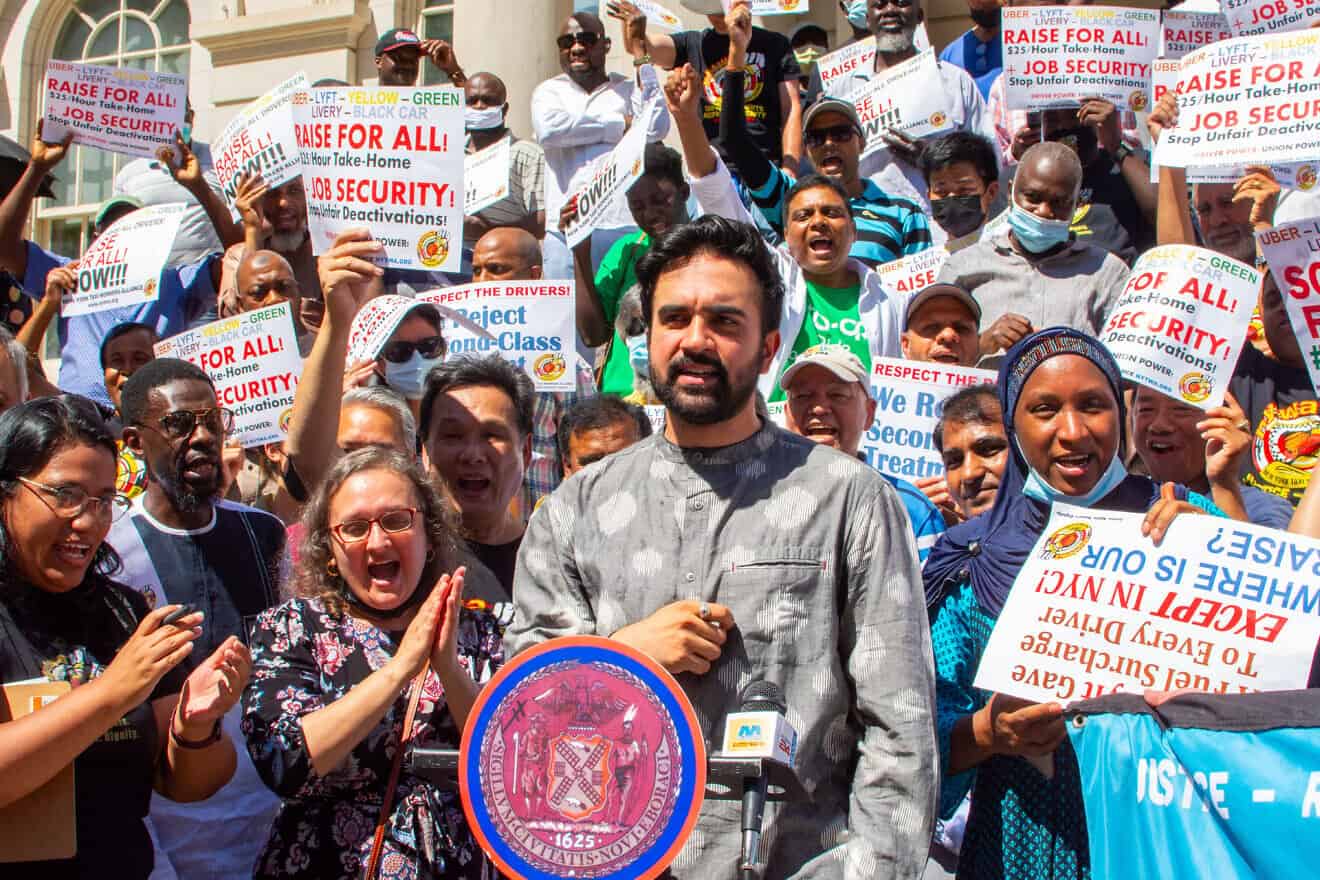
We have spent years documenting the systematic infiltration of anti-Israel activists into state and local government. We’ve published an analysis of the pipeline that moves candidates from campus chapters of Students for Justice in Palestine to city councils and state legislatures. We’ve built the Mamdani Index to track and score officials nationwide. We have warned that while traditional pro-Israel organizations focus on Congress, a parallel political infrastructure is being constructed beneath them—one school board, one city council, one state legislature seat at a time.
This article is the field guide. Whether you’ve noticed something concerning about a candidate in your community, identified a troubling score on the Mamdani Index or simply want to understand what warning signs to watch for, this guide explains how to recognize these candidates, what tactics they use, and, most importantly, what you can do to stop them before Election Day.
Perhaps you’ve already raised concerns with local Jewish organizations, and they’ve told you not to worry, that you’re overreacting, that the candidate has moderated, that engaging would be divisive.
Do not listen to them. These organizations do not have the experience or expertise to operate in advocacy, plus they are organized as 501(c)(3) organizations that are prohibited from engaging in electioneering.
That exact pattern, concerned community members raising alarms, establishment organizations dismissing them and problematic candidates winning as a result, has repeated across the country. In 2022, it happened in West Hollywood, Calif., with Chelsea Byers. In 2025, it happened in New York City with Zohran Mamdani. In both cases, the warning signs were visible. In both cases, the candidates won.
If you’re reading this because you suspect a Mamdani-type candidate is emerging in your community, trust your instincts. These candidates deny, minimize and reframe. Organizing boycott, divestment and sanctions campaigns becomes “advocating for human rights.” Leading anti-Israel protests become “standing up for free speech.” The language shifts; the record remains.
Do not accept reframing at face value. If a candidate claims they were merely supporting “free speech” or “human rights,” ask them directly: Do you support Israel’s right to exist as a Jewish state? Have you ever participated in chants calling for Israel’s elimination? What is your position on BDS? Document their answers.
Many of these candidates are genuinely likable. They present extreme positions calmly and reasonably. They use humor to deflect criticism. They emphasize identity markers like LGBTQ+ status, immigrant background and youth that make attacks feel uncomfortable.
Mamdani’s campaign included a rap video and regular displays of wit. When confronted about “Globalize the intifada,” he didn’t become defensive; he softly reframed it while appearing reasonable, making his critics seem shrill by comparison.
Do not let personal charm distract from documented positions. Evaluate candidates on their organizational affiliations and public statements, not their campaign persona.
These candidates build broad progressive coalitions that lend legitimacy without scrutinizing their Israel-related positions since those positions are most often unrelated. Union endorsements, environmental groups, LGBTQ+ organizations and housing advocates lend credibility while steering attention toward domestic issues.
Mamdani’s mayoral campaign benefited from DSA infrastructure, Palestinian American activist Linda Sarsour’s fundraising and even international support from Jeremy Corbyn, former leader of the British Labour Party, despite his documented antisemitism controversies. The coalition provides cover, but the toxic ideology remains.
‘This is a losing trade’
Perhaps the most effective shield is endorsement or defense from Jewish organizations themselves. Mamdani-type candidates actively cultivate relationships with progressive Jewish groups and individual Jewish leaders who can vouch for them when concerns arise.
When Chelsea Byers faced scrutiny during her 2022 West Hollywood campaign, a letter signed by leaders from Democrats for Israel chapters, Progressive Zionists of California, the California Young Democrats Jewish Caucus and other Jewish organizations declared that she “is not antisemitic” and that “her views have evolved.” The letter urged voters to focus on local issues, arguing that “this race should be about West Hollywood, not the West Bank.”
This is the playbook. Jewish organizational cover allows candidates to dismiss criticism as bad-faith attacks while pointing to Jewish endorsers as evidence of their moderation. The signatories may be well-meaning, but their intervention provides exactly the legitimacy these candidates need to neutralize opposition.
When evaluating such endorsements, consider whether the endorsers actually reviewed the candidate’s full record or simply accepted their current self-presentation. Ask whether they have the political experience and ongoing leverage to hold the candidate accountable after the election, or whether they are primarily focused on social services, interfaith work or other communal priorities that leave them poorly equipped to vet political candidates.
Jewish cover is the most valuable currency a Mamdani-type candidate can acquire. Once obtained, it becomes extremely difficult to raise concerns without appearing to attack the Jewish community itself.
Here is the difficult truth: Legacy Jewish organizations will often tell you not to engage. They will insist that the concern is exaggerated. They will warn that raising the issue publicly will be divisive or counterproductive. They will counsel patience and quiet diplomacy.
This approach has failed repeatedly.
In 2022, when community members raised concerns about Byers in West Hollywood, several establishment figures insisted she was harmless. Some attacked those who raised alarms as divisive. The result: Byers won by 54 votes.
Understanding why these organizations fail requires recognizing what they are and what they are not.
Most local Jewish community infrastructure, such as Federations, Jewish Community Relations Councils and regional offices of the Anti-Defamation League, exists primarily to provide social services, facilitate interfaith dialogue and respond to incidents of Jew-hatred after they occur. They’re not built for political engagement. They lack the expertise, appetite, and, often, legal structure to intervene in electoral campaigns.
When a Mamdani-type candidate emerges, these organizations default to their institutional comfort zone: convening conversations, issuing measured statements and hoping the problem resolves itself. Direct political confrontation is outside their operational DNA.
Many mainstream Jewish organizations are led by professionals and board members who identify strongly with progressive movements. They see Jewish communal priorities, social justice, immigrant rights and LGBTQ+ inclusion as naturally aligned with the broader progressive coalition.
This creates a structural blind spot. When a candidate emerges from progressive networks with troubling positions related to Israel, organizational leaders may view criticism as an attack on the coalition, rather than a defense of Jewish interests. They may choose to prioritize maintaining relationships with progressive allies over confronting a candidate who threatens the Jewish community specifically.
The result is rationalization: the candidate’s views are “evolving,” the concerns are “exaggerated,” and engaging would be “divisive.” These organizations choose coalition comfort over communal protection.
Some Jewish organizations believe that building relationships with problematic candidates will moderate their behavior once in office. They offer endorsements or refrain from criticism in exchange for promised “dialogue” or “access.”
This is a losing trade. Mamdani-type candidates benefit from Jewish organizational cover during the campaign—the one moment when they are vulnerable—and face no accountability for policy development and implementation afterward.
‘Do not be silent’
Before raising public concerns, build a comprehensive record. Archive social-media posts, especially anything that may be deleted as a campaign approaches. Collect student newspaper articles, organizational newsletters and event announcements from the candidate’s campus years. Obtain disclosure forms via public records requests and cross-reference them against public statements. Screenshot LinkedIn profiles, organizational bios and conference speaker listings. Record public statements at candidate forums and community events.
Documentation transforms suspicion into evidence. Without it, concerns are easily dismissed.
The window for effective intervention is narrow. By the time concerns reach mainstream awareness, early voting may have begun. Raise issues publicly as soon as a candidate announces, not during the final weeks of a campaign.
If a candidate lies about their history, say so with evidence. If they deny affiliations that appear on disclosure forms, publish the discrepancy. If institutions provide cover, name them and explain why their assurances should not be trusted.
Silence creates the false impression that there is nothing to be concerned about. Do not be silent.
Mamdani-type candidates do not rise alone. They benefit from endorsements, appointments and political cover provided by other officials. These enablers must face consequences for their role in advancing anti-Israel candidates.
When a sitting official endorses a Mamdani-type candidate, they are lending their credibility to legitimize that candidate’s record. Track these endorsements. Make clear that endorsing candidates with anti-Israel, antisemitic backgrounds will be remembered and will affect future support, donations and endorsements in their own races.
Silence is also a choice. When a Mamdani-type candidate emerges and elected officials who should know better refuse to speak up, they are prioritizing their own political comfort over their community’s well-being. Document which officials remained silent when it mattered. Their silence should be a factor in future electoral support.
Some officials will acknowledge a candidate’s troubling background but urge voters to overlook it, arguing that the candidate has “evolved,” that the concerns are “overblown,” or that other issues are more important. This minimization is as damaging as outright endorsement. It provides cover while maintaining plausible deniability.
The goal is to create a political cost for enabling Mamdani-type candidates. If officials know that endorsing, appointing, excusing, or staying silent about anti-Israel candidates will affect their own standing with pro-Israel voters and donors, they will calculate differently. Accountability must extend beyond the candidates themselves to the network that elevates them.
If you are reading this article, you likely already suspect that something is wrong. A candidate in your community has a troubling background. You’ve raised concerns and been told to stand down. You’re uncertain whether to trust your instincts or defer to organizations with more experience and resources. Trust your instincts.
The tactics documented here are not theoretical. They have succeeded in communities across the country. They succeed because concerned individuals are talked out of acting by institutions that prioritize comfort over confrontation.
You do not need permission from legacy organizations to protect your community. You need documentation, coordination and the willingness to act before Election Day, not after.
The warning signs are visible. The tactics are documented. The counter-strategies are clear. The next election is mere months away. The question is whether our communities will be ready.